Reminiscing with a Tea Inspired Retailer
About this episode
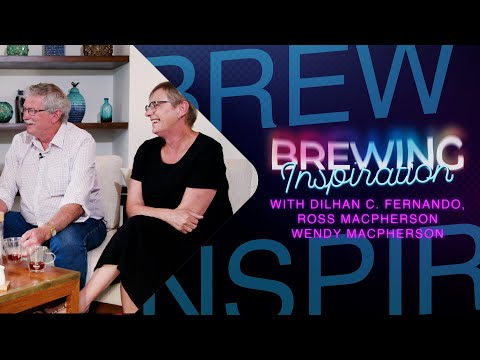
Ross McPherson. Australian retailer Ross McPherson and his wife Wendy catch up with Dilhan Fernando over a cuppa. They talk about Merrill J. Fernando’s early years in Australia, and a golden era of retailing, when quality was precious and discounts weren’t fatal.
#DilmahFounder #MerrillJFernando #InMemoryOfDilmahFounder #DilmahFounderLegacy #Dilmah #Integrity #TeaInspired #DimahAustralia #australia #DilhanCFernando #RossMcPherson
Transcript
This transcript was created automatically from the audio and checked for names. Minor errors may remain.
Ross and Wendy, you're two of my father's oldest friends and you come from the heartland of Australia, the country that he loves. You know, launching his book last week, it was more than, it was sentimental, but it was also for us, it was a milestone, it was a big thing. And not having him there was a challenge and so what I wanted to do was to invite some of his friends, people like you whom he loves, to tell a few stories. A few? Yeah, well, the good ones, the ones that are okay on TV. Well, I can tell you a couple of stories. The first time I went out and met Merrill was in about 1988, I think it was early 88, and he turned up on a Monday at Coles and he didn't have an appointment.
I didn't even know who he was from the borough of Soap, so my assistant, Kath Cole, a Scottish lady who I couldn't understand one word she spoke, she came out and says, oh, there's a man outside in a very good suit. He always dresses well, your dad. And he said, oh, he wants an appointment with you, but he hasn't got one. He says, appointment days is Tuesday. He says, he's intimate, he wants to talk to you. I said, oh, if anyone's that keen to come and see him on a Monday, I'll talk to him. So he came into the office and I thought, geez, it was like someone walking into a room that your hair stood on the back of your neck.
It was a bit shaky. And he gave me a presentation of his products. He'd been in Melbourne the week before and the Coles negotiation team had set up a set of trading terms. And he just looked at me and he says, well, are you going to put it in or no? I said, well, yeah, I'll put it in. Basically, you've done all the hard work. And the thing that sold me was, and it was with a lot of other people that I also put their products was, is the pure passion he showed. It was like, it wasn't because it was a good product, but he made you feel like you were part of the product and you believed it.
He says, oh, I'll get it going. And it's a single origin. He said, do you like cups of tea? I was brought up in tea. To me, tea was the working man's drink. And we actually just celebrated. In the morning, five o'clock, one would get up, have the wood stove going. She had a boiling water in the pot there. And she had a kettle that she got from her grandmother before her mother died. And she would pour a cup of tea. And she had a funny looking tea cozy. You know the ones, those West Indians wear on their heads? Had a tea cozy. And she'd sit there and pour the cup of tea. It was like a ceremony amongst the family.
I've got two brothers and two sisters. And we sat there having a cup of tea. And you had one cup, but then she'd pour more water into the same tea leaves. So I don't know where the teas came from. I assume they in those days could have come from anywhere. I know that my mum's father was very keen to have salon tea, but he died in 1962. So I don't know where happened after that. But I got a tasting for tea from a little kid. But when your dad came in, it was a case of, I didn't even, I used to fight supplies for money. I think he got him without paying a cent.
I just loved the passion. I've one or two other, as I said before, other two people that I thought, well, I don't care what happens. There's something about this person. He's so committed to the product. How can I deny him? So that's when I met Merrill. And I think the second time he came and saw me, he rang me up on Friday night, about 11.30. Just before we got up for the next day's work sort of thing, you know. And he says, oh, can I meet you at the Sheraton Hotel for breakfast? Oh, OK. You're in town, yeah. This is pretty good, you know. A small window. He says, yeah, can you meet me at 5.30, 6 o'clock?
Yeah, OK. We can do that. So I get down there. And he sit there. He's eating his breakfast. He's having his cup of tea. He put his own tea, I think. And he's having his cup of tea. And he says, do you want some of the wheat? No, no, he doesn't want any of the wheat. He's only here for five minutes. And he just gave me the new packs. New packs of tea and the wrap around it with the gold on it. And I said, well, OK. Well, that's right. Then I went to work. So I was at work. I worked Saturdays anyway. So you didn't get breakfast?
No. But I knew he was going to see probably baby John Burgess, I think, or some sleazy Iranian announcer person at the time. He had a schedule. He had so much planned for the limited time he had. He's probably in his late 70s at that stage. And I'm trying to look at this guy. If I'm like this when I'm his age, I'd be a mountain. I'd be a motor. And he would just keep on pushing, pushing, pushing. And I'd say, yeah, that's pretty good. I'll definitely look after him and support him on the shelf. And it's a case of we lost that personality part. We took it away from bi-relationships, as in not just buyers, but it's a partnership, friendship sort of stuff.
And then they cut that out. Not from the state I was in, but nationally. So it's too hard to deal with relationships, not me. And that's why I reckon sometimes in the track someone went after me because I wouldn't change my beliefs and my values. And I'll always support someone who will show the passion and the commitment to his product, what your dad did. So as a buyer, Ross, your role was to steward what your employer offered the consumer. So it was about the consumer. Do you think that that change that you talked about, has it been beneficial or has it been detrimental? Well, from not working in the trade anymore, looking back on it, I think it's really bad.
We were taken over by West Farmers and they bought in some blokes from England. So we lost 30 years of development and bought in these people. All of you was cutthroat. They're just purely profit driven. My belief in a retail environment was you look after the customers first, your staff second, your suppliers third and the shareholders will be looked after because of that. But it's gone the other way around now. It's the shareholders, shareholders, shareholders. They don't care rats about their staff. And I don't really think they care much about their suppliers as well. It's a case of let's get as much as we possibly can from the customer as much as we can and get the cheapest product from the supplier.
And I don't think that's really working that well. But you can see it in Australia at the moment. The retailers putting prices up above what the suppliers are putting up and that's causing inflation. When you get a 25% increase in profit on the bottom line at the end of the years when they present it to the share market, 25% increase in profit means to say the prices have gone up above cost. That's all that means. But it's an exciting man to have around. I remember when I think you might have been with him when he came to my last store. I was running at College Karawara and he walked in.
I knew you were coming at some stage but there was like an entourage coming through the door. You guys never travelled. One member of the family stayed home so we don't kill all the whole family off. It was bang, bang, bang, and all my staff. They just started gravitating to the tea section. I'm trying to work out what are you guys doing? And your dad was down there talking to some of the staff. And I tell you what, I remember one Michelle Winter, she got such a buzz out of your dad that day when she took some pieces of it. I couldn't get her off the roof for a couple of days.
But had that effect and impact on people, it was like, in a way, a god walking in. You know, he'd been on TV but he's so smooth with the women.
The blokes just walked in and said, I wish I could be like him. No, you don't. You know, my father would always tell me, never chase the profit. Always do the right thing and the margins and the profit will follow. And it was a long time. It was probably a good ten years at the beginning when he first launched Dilmah, he had so much unfair opposition. And it's also brought into focus because Australia, you have so many beautiful small businesses, really a thousand Mario Fernandos and his vision. How do you handle that? I mean, how did you, were you able to balance the interests of the big businesses who had the market power and dominance and the little guy?
Well, I suppose I was lucky. I was in an environment where I could do what I wanted. The head office control, you know, it was there, but I had, I believed my own strategy. Like I said, I had other people. I had a lady, Elaine and Gordon, and they had truly scrumptious jams and they made the best quality jam with, you know, everything had to be the best. I had Tom Munchiner, Perth Mustards, and he made the best. And I'd actually picked stores to put this better quality stuff into. Lint Chocolate was the other one I put into, WA, then Australia. But it was always about quality.
It was always about trading people up and giving the option to buy a better quality product.
I think that ever since the English came to Australia in a big way in the 60s, we lowered our standards because they chase cheap. They're not really that worried about quality. It was all about cheap. Yeah, the tea bags came in, so he got rid of that, that homely pouring the tea, the leaf tea in. They brought in instant coffee. You know, we were in a coffee-drinking country anyway that stage. They brought in so many things that were devaluing the original idea of the product. And even now, I think that was one of the reasons we have a problem in Australia because both Woolworths and Coles and IGA, or Metcash, also are people that were from the English system of Tesco and they brought that same philosophy with them, which is we'll sell it for as much as we possibly can and pay as least we possibly can.
I always believed the fact that you don't have a business under share of suppliers. They had an idea that we'll always find another supplier. You won't always find another supplier of quality. And I think that's where I differentiated in my business that I did with Coles. I had demographic profiling done at every single store in the state. I brought in Tesco products from Tesco put into our English sections. I brought in stuff out of South African supermarkets to put in our stores for the South African areas. I had probably 30 different countries' products, the Jewish range, the Muslim range. I had ranges specifically developed for each store.
And so to me, Dilmao to me was a better quality product than what we had on our shelf beforehand. And I was keen to make sure people understood that it was quality. When my father first entered the Australian market, that was September 1985 in what I know. And I know lots of, there were lots of people who were unhappy. But what do you think the trade and the consumer response, I mean, did you see anything that people were upset? I had suppliers upset. I had suppliers who were willing to pay, not to put your product on the shelf. We were at a stage where Woolworth said, we're going through a major problem.
And Woolworth's owned a couple of brands. They own Amguri and they own Fowler's and Rover in Australia through the South Australian business. They bought our business that had those. And Amguri was another one. We, that was the products, and Tetley was a little bit coming in. But they were the brands that were hanging around. And they were, there was no marketing, no advertising. It was close. Adelaide Steamship owned them. They also owned Woolworth's through a bloke called Ron Verrilli out of New Zealand. And he was choking it. So there was no money. Tea business was collapsing because there was no funding, no marketing, no nothing coming in.
And I think basically that sort of, probably put a bit of dampener on the initial stage of bringing a new tea brand in. But I always felt that people like Lipton's didn't pick up their game when you come along. They started bringing in the tea bags that were the triangular tea bags and thought that was going to make a difference. But they've been tried in England with PG Tips and it hadn't worked. I think you guys bought it out a couple of years later and it seemed to have a little bit of the market. But I think Tea itself has never managed to get back to where it was in the 50s and 60s.
And I think that is because we took away the emotion, the relationship between having a cup of tea, sitting around at the table in the morning, or afternoon tea, having iced tea in summertime with sort of cool drinks and alcohol. I can remember my mum got from her a grandmother. Another thing was a beautiful glass jug with all these birds on it and he had gold etching on it. And summertime, mum would make the last cup of tea, she'd pour that in there in the morning and about three o'clock in the afternoon, she'd fill it with ice, mint, a couple of lemon from out of the back garden and we'd have mint tea.
And that was great until I broke the jug. So I broke the tea pot and I broke the jug. If anyone's got to kill the tea business, it's got to be me. So all of this evolved into a beautiful friendship with Wendy yourself and your generations. How did that happen and what was the nature of the buyer-seller relationship back then that made this? I think we're unique in Western Australia because we were a long way from anywhere and we're at the stage where the best performing business in the nation as profit percentages and sales percentages with the SST board, which is where it all went back later on, we were all struggling.
Sorry to interrupt you, but Dilmah overtraded in WA and I think at one point we exceeded 16% share, so that was probably you. Well, in our share when it was us against Woolies and Coles, Coles had 37% market share, Woolies had 17, and Metcash had all the rest, but in those days Metcash had some really strong businesses, Action, Advantage, Cheek Foods, Farmer Jacks, and a bloke called Dave Force, an exit coal state manager, who knew how to screw both Coles and Woolies, and he was driving big business until they got rid of him. He made a couple of bad decisions personally and they moved him away, but yeah, I think we were lucky the fact that we initiated a lot of the stuff nationally and then everybody else over there pulled it apart and then started criticizing it, but we probably caught up with these estates people with their philosophy about once a year, if you're lucky.
We didn't have to, we actually were only, our state managers are the person we had to deal with, we'd have to deal with head office. He dealt with them, and he was an ex-missionist manager as well, so that helped. But what you described about your demographic ranging and so on, that's the kind of thing that in today's marketing world you talk about as more precise targeting, and it's what the retailers are trying to do right now. Yeah, but they're not. They will pick something that they can make a lot of money out of. Service items are diminishing on the shelf. Branded products being chopped out for house brands.
There was always a place for everything, but it's now gone too far. Like I go to my local coal store across the road, I've got a Coles, I've got a Woolies, and I've got an Eldie. Actually, I've got an Eldie first, and I do my basic shopping. Now we're tired, so you've got to watch the penny. So you go from there, back to Coles, and it's big specific items. But you go down the aisles, and there's brands disappearing, hand over fist, and a lot of these companies have stopped marketing because of it. In 10 years' time, the retailers, the major retailers, Coles and Woolies would have put them out of business.
But I find the Metcash group still are allowing a fair bit of product on the shelf that's not controlled by the... But they're not very good at as good as the rest of them in house brands. But that's all English. That's how the English did it, you know? And the English inflation on food is about 13%. And I can tell you now that their profit margins on the last report they put through were higher growth than the 200% Australian guys put up against their cost. The inflation has been driven by greed in retail. So do you think that that's something that could feel a change in perspective, focusing on the numbers rather than focusing on quality and delivering something that benefits the consumer?
Well, while we keep on running the English sort of pattern, I think we're going to have cheapness, cheapness, and everything's going to be cheap. We went through the Coles down, down, down price structure, and then all of a sudden we have a whole stack of products at half price. They can't be. Where's the ACCC? The half price, you've got to have the product up at full price for six weeks and you've got to prove sales before you can put it down. They didn't do that. This is going straight through. There's no wicker keeper anymore. I see your brand as a product that stands out in any product.
Everybody else should be just peripheral to you. But unfortunately you've got buyers in there that have got a philosophy that... Oh, is it done for tea? Yeah, they don't know what a cup of tea looks like. I'm lucky I'm 65 years old. I was brought up with tea. And I probably drank tea probably in a week, probably 50 or 60 cups of tea. Even when this all worked, I was the only bloke who was drinking out of tea cup. You know, everybody was like, oh, coffee, oh, milk, no, tea. What do you drink tea for? Look how healthy I look. Ross, was it ever important to you that...
Well, you can see on the cover of my father's book, picture of the school kids, programs for the tea pickers and all of this. Was that important to you when you took the decision? I do, and that's because that was part of the passion. To me, life is just not about yourself. You're here for a short period of time. You have one chance to make an impact. Sometimes you get more of one chance if you're lucky. But to me, being able to... And I suppose, you know, I've got a Christian break around. My attitude has always been, where I can, I'll give. And I'll help. And one of the things Merrill's done is basically, if you stand back or bring the tea bios from Australia over here for a week and take them to all the places that your dad has done something good at and got them to understand in their small brains, because most of them only got small brains, that this world doesn't evolve around them.
It evolves. The customer needs it. They'll pay the premium price, but the money that's the premium price goes back in a country that really needs some development. He's the only one out there supporting Sri Lanka, really. These people didn't have him going on. Where would they be? Did you see that in some of the other small producers? Do you see the same passion? Yeah, I do, but not to that degree. They're always willing to share things, experiences, but nowhere near as much as your dad. Your dad is a global entity on this. I was talking about people that made chillies and pick a lily down at Margaret River and Berry Farm, which you'll never get to because you just don't have the courage and the heart to get there.
Because your dad didn't either. I've got a letter there. In 2012, I'll be able to see it in a year to go to Margaret River and go to the bloody Jolly Frog again.
I saw Philip Sadik, Benjamin's, he had the Jewish range. He had the same thing. He's pretty well in the same position your dad is right now, and his wife is as well. They support about 35 families in Perth out of what they've made. But the passion really, I think it comes from your dad. I think these guys probably felt a little bit purity on doing so well. Because I was always saying, look at what Merrill's doing to these guys because there are a bunch of people that I still keep in contact with, even though the last time I was in buying was over 20 years ago.
But they're still my friends. Eric Ferrari at European Foods. He still supports all the people he used to support. Every time there's a charity, he's the first one out there to give him a hand. I'm lucky in the fact that I was at a time when people cared about others. And that's the philosophy they have even now. Also in Australia, I first learned about business with my father in Australia. And one of the things I saw that the retailer, the supermarket, was a big part of the community. So do you think that as a buyer you also had or still have an obligation to the community, to help the community to be to the social side, the environmental side, as well as the commercial side?
I do, but I'm a firm believer in you've got to help yourself first. And I still have contacts around the place that know that if they needed something, I'd be the guy they come to. I have friends out there that have families and stuff that it might have been... Well, one of the girls was a telephone child back in the 200s or 2000s, and she needed to do fundraising. So I organised all my suppliers to a bunch of hampers. So that went in and they'd make money out of that. But I could get suppliers to help. Well, these days I think it'd be because of... What do you want that for?
You know, it's a case of we don't do that anymore. I'm all worried if... It's a funny thing. When I was a buyer, I had a merchandise manager. We went to the cricket with him. And with the supplier. And the next day my manager came and said, if you realise that was our money he was spending on you, because you should be getting that money off him instead of going to the sporting thing. That's the attitude they have to me. Forget about the community. Forget about the relationship. Forget all the rest. It comes down to cash. When I was senior buyer, I had a budget. There was $410 million a year I had to get above the table.
Forget about the trading terms. That's a lot of money out of a place like Western Australia. And we never missed the budget, but we never shafted anyone. I'd get people willingly come along and support us. It just matters how you deal with customers, the suppliers as well. Even as a store manager, I felt that... Well, I still get messages from people after I left 14 years ago for Christmas and Facebook. People that would just work for us or customers that came in shopping, they would always come into discussion. I was never in the office. I was always out of the TI because your dad was in there.
But I had my own brand on the shop. And that's my problem. I put my own signature on each one. You told me some beautiful stories about the time that you ran your store and your philosophy. Share a few of those with us. Well, I believe in having the best staff, the staff or employees, or what do you want to call them, team, whatever it is, the cash phase these days. But I would go along and I inducted them in my life. I spoke personally with them. First two days you came to work, I spent every single minute you were there with you. You came to morning tea, lunchtime, afternoon tea, and I said goodbye.
I did that for two days. So they had a hands-on walk around. Even though they might be in the deli, they got the whole shop experience. And that managed to breed a commitment from them, which was more related to making sure when a customer wanted something or wanted some advice on something, they were capable of doing it. I encouraged everybody in my staff to learn everything they could about the products we sold. From the freshness, the use-by codes, what was extra unit, the manufacture, the country of origin, and basically the philosophy of the company behind them. You wanted to let them know that if you had someone come in and ask you what's the best tea, the person without thinking would say, well, Dilmah is because it's single origin.
Fresh, 12 weeks from packing it, from picking it to be actually in your cup at home. You needed to have that knowledge base going forward. And I think basically the staff, even now the staff, when you go in and they recognize me, they talk to me, and they used to love the fact that I would always go and educate them when I was in the buying office. I'd have seminars. I'd have talks where we actually would encourage people to know more about the business because retail is a very lowly paid introductory point. And the more knowledge you gave them, it helped them in their life as well.
They then started realizing, hey, I can do this. I created managers and buyers just by getting to run the philosophy that you've got to do the right thing by the customer in everything you possibly can. And the customer is never going to be someone that's too demanding. Admittedly, there's been people in my life when I was store manager where I've shown them the door, you know, don't come back. But in general, it was something that over the 35 years I was in retail, whereas I felt that the passion you had for retail, I still have it. I come to Sri Lanka and I spend my life looking in supermarkets trying to find things.
It's a totally different environment over here. Like my supermarkets we were running was 5,000 square meters. These ones here, you probably get ten of them inside the ones we had. And it was always about making people realize that they are doing a service to the customer. And the supply is doing a service to the customer as well because we're all here to serve. It's not on this earth here that doesn't have a service job. It doesn't matter if you're in government, we're all serving someone else. So if you can't serve someone, serve someone that is serving someone. And that's basically how I used to get things through.
In fact, you did on because in my father's book we added a suffix disruptor, which he was in disrupting a colony. I like disruptors. You talk about disrupting today, but I think his was a very different form of disruption. No, it is to a certain degree, but disruptors are there for a reason. We've got some big disruptors in Australia. Chemist's warehouse is a disruptor because he'll sell you a prescription for $6.50 that everybody else sells for $35. So he's changing the whole face of pharmacy by being a disruptor. I think disruptors is a great place for disruptors because we've become so used to the norm and the devaluation of our products.
We need people coming in NXT. He needs to come back and do another disruptor, doesn't he? I'm hoping that we live up to that. And team maker, of course, but also servant on your point. I'm looking forward to the comment there, coffee maker on the bottom as well. One day, well, we're growing coffee now, so one day. But Ross, you didn't complete, you didn't finish answering my question. How did this business relationship evolve into a personal one? I mean, quite apart from the fact that Wendy is such a lovely person. How is it that we have such a strong bond that 20 years on we're sitting here talking about my father?
Well, I just got so enthused by his way he's lived his life and his attitude. That I had to come and see Sri Lanka. And we did that in 2007, brought the three boys with us after Christmas and had a bit of a tour around the place and fell in love with the place, basically. And I think, basically, ever since that day, I've had an affinity with Sri Lanka about the products they manufacture. They can do more with what they've got, but unfortunately, that's a different time and a different bunch of people. We'll talk about that afterwards when this thing's turned off. But to me, I found that he is genuine.
You know, his love for people and for his tea, for his family, you don't find that everywhere. You know, he's got this amazing enthusiasm. Even now, I suppose, he's not that well now. But I bet you can get a smile out of him. Absolutely. And that's what melts people. He just smiles and... You wouldn't believe what he asked me two weeks ago. He was in hospital, and I was talking to him and explaining to him some of the things, and he was recovering from an infection, so not in great shape. So he tells me, how's Australia doing? I said, he's going well, and I gave him...
He lied to him, didn't he? He didn't tell me the whole truth. But then he tells me, what about the three hundreds? Because that's a line that we've always copied on. We never made money off the three hundreds. But, yes, passion. He worked a full day until 91. And now, given half a chance, if his body was able to keep up with his mind, he would be out there. But tell me, in conclusion, your relationship with my father is one that I really admire. You know, post-COVID, we realise that it's relationships much more than anything else that matters. Tell me what, why? Well, I think also, not just the relationship, but he introduces to you guys.
The thing is, because he was so passionate about his family, and he also spoke passionately about his family. No, I didn't. That's what he wanted to meet, like he said, for Wendy. Yeah. So, and then, he was... And I think at the time, you came out with him, and he wanted our family to come with you. So he took you out for the day and all that. And he just has always shown a great love for our family.
Yeah, but his family is just not you guys. His family is so many more. Just look at all these people here, these help. And you probably will find that that's the only family they're ever going to know. From a father figure point of view, they'll go up and go, I want to be like Merrill. You know, I want to be like the team maker. I want to be like the coffee maker. Single orange and dillmarked coffee in the markets in a year's time. In probably in 10 years, but that would be an honest job. No, no, no, no, no, no, there's coffee here now, you just need to take it off the blokes with it.
Yeah. Because I had a coffee. But now, we're playing this trick that the boys all said, and it's Merrill? Yeah, it's Merrill. I don't know. I hope so. So, they always say, please don't hide, please don't hide. Well, we were disappointed in 2020 that we didn't get over for his 90th birthday, so 93 was, I suppose, the earliest we could get there for his birthday. But so many of his, I suppose, contemporaries in Australia, like Eric said, make sure you wish him happy birthday. Philip said, make sure you wish him happy birthday. My mate said, and my family, make sure you wish him happy birthday, because he's touched so many people, even just through me.
I talk about him all the time. He gives books to everybody. You know, you give them the books. You give them the books. Take a read. This is a story that you need to know. This guy should be crucified as the first Sri Lankan saint. He's helped more people than Mother Theresa did. You're working on that, are you? It's a beautiful philosophy. And I think what is wonderful about our conversation is the fact, Ross, that you're sharing personal insights. And that's, more than the words in this book, that's what matters to us. I believe in, he's like me, hard on the sleeve. So it's 2023. We'll be seeing you back, I hope, in 2025, not 2007.
I don't know. We've got two grandsons next. Well, of course. I mean, I'll be seeing you before that, probably late in the year. I've got some stuff for you too. I had a bit of research on El Questro in the north west. They're only a deal. Exactly. No, stay for seven months. I ain't paid for four. Deals are always good. Maybe like the Australian supermarkets. No, no. Well, 120 teabags, the price of 100 sounds good to me as well. You can do that for a reality every day of the week, I reckon. Thank you. And the thing about it is it's not just the Dilmah brand, it's the salon brand.
To me, Sri Lanka is a country that needs more brands that elevate it to a spot in the world that people sit there and say, oh, yeah, salon tea, Sri Lankan tea. That's the best. And that's what I like about it. You know, every day, I have a cup of tea, and it's consistent. It's like McDonald's. It might be crap, the McDonald's, but you know what you're going to get. With your tea, I know I'm going to get a good cup of tea every time. Thank you, Ross. Thank you, Wendy. It's been amazing chatting with you today. Thank you.