Climate, Biodiversity & Green Growth. A conversation with biodiversity scientist & Linnean Medal winner Dr. Rohan Pethiyagoda
With Dr. Rohan Pethiyagoda
About this episode
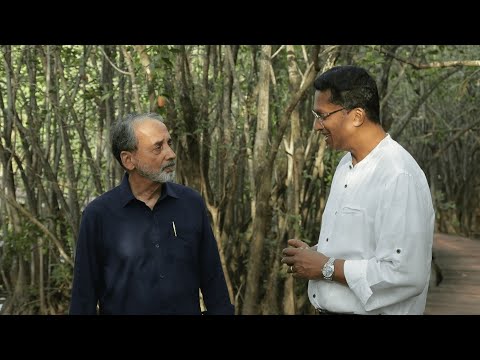
Dr. Rohan Pethiyagoda is a scientist with a pragmatic & businesslike approach to protecting the environment. It was a rare privilege to spend an hour in conversation with him in the Colombo Wetland on a balmy Colombo morning. From Climate to Biodiversity and ecosystem services, green growth and altruism, this is our conversation.
Dilmah #Integrity #DilhanCFernando #RohanPethiyagoda #ClimateChange #Biodiversity #EcosystemServices #GreenGrowth #EnvironmentalConservation #ColomboWetland #SustainableLiving #ConservationTalks
Transcript
This transcript was created automatically from the audio and checked for names. Minor errors may remain.
We're in Badagana, at the center of the Sri Jayawardenepura Kotte Sanctuary, and in this 20 hectares of absolute tranquility, within earshot of the frenzy that is about to begin in Colombo, a city of over a million people, we have peace, serenity, evidencing the truth that nature has an incredible impact on human health, mental wellness and all of those things that plague us today. Now when we talk of the environment, and when we want to talk about in an eloquent, knowledgeable intellectual philosophical terms, there's only one person that I invite for that conversation and that's Dr. Rohan Pethiyagoda, Rohan good morning, Rohan tell me, we are in this beautiful place, and it demonstrates so much about what is so special about nature, yet we hear constantly about global warming, about climate change, now the climate emergency, what really is it?
So climate emergency is something slightly unusual in the sense that there is no government or the United Nations that has recognized this word emergency related to climate, but the fact is that we've got changing climate, so temperatures are increasing and we're looking at a substantial increase of temperature by the end of the century, that will be roughly what temperatures were about 120,000 years ago, at the very dawn of humanity, and we have no idea how humans and agricultural landscapes and biodiversity and so on will adapt to that, because of the changes that we ourselves have made to the planet in the past several centuries, and then we have increasing sea levels, sea levels going up by maybe two feet by the end of the century, which is a lot, because remember that when the tides are two feet higher, the salt water comes much further into rivers, so quite apart from coastal areas getting flooded, we have to remember that coastal or literal agriculture will change substantially, and then we have rainfall, so in Sri Lanka being a tropical
country with high rainfall, agriculture dependent on rainfall, largely rain fed, changing rainfall patterns will mean changing agricultural regimes, so we have to factor all this in to our thinking going forward. How urgent is this, is the question that people always ask. So whether or not we use the word emergency, the fact is we have a very urgent problem on our hands, and we have to learn to adapt to it and build economic and social resilience to this problem, and that I think is the challenge that lies before our generation. A lot of innovation will come in the future with renewable energy, ways to reduce the greenhouse gases that are driving climate change worldwide, and Sri Lanka's contribution to that is pretty trivial in a global scale, but what is important right now is regardless of what is driving climate, that we build our social and national infrastructure in a way that can be resilient to any challenges that it presents.
Rohan in the biodiversity we see around us from Sri Lanka and Ayurveda, we learn that in these leaves and in these insects you have medicines, you have really, you have the essence of life on earth, but also you have the precondition for growth, for businesses. To what extent do you think green growth is a realistic alternative to the current economic model? So there's good news and bad news here. So one is that we do recognize that we have this huge diversity of life on this island, almost 3,000 plants indigenous to Sri Lanka, more than 1,000 that are endemic. Very few of these have been explored or analyzed to find out what their chemical properties are.
We need to remember that when we have plants of medicinal interest, in modern medicine we also look at what negative impacts those plants could have if we consumed them. So the plant that you take to reduce blood sugar, for example, might be nephrotoxic or damaged kidneys. So all this research lies ahead of us in the future, but the resource, the genetic resource is here at our doorstep and how we exploit that remains to be seen. With regard to the idea of a green economy, this is a more complex problem. I think the most pioneering work on green economics was done by Costa Rica, a country pretty much the size of Sri Lanka.
We are 65,000 kilometers, square kilometers, and there are 50,000 square kilometers, much smaller population, about the same GDP as us, but of course per capita GDP five times ours because they have a small population of about 5 million people. They embarked on a green economy 30 years ago, so way ahead of us. So now their electricity, for example, is 100% renewable, has been for many years. They export electricity to Nicaragua and Panama on either side of them. Another really successful example of a green economy, but also heavily ridden by, that's the good side, the negative side, is that they've got a debt profile that looks very much like Sri Lanka's.
So very often when we talk about green economics, we have to balance it out by what else might be driving GDP growth because sometimes borrowing, for example, could be driving it and that's not a good thing. Because Sri Lanka's attempt to go towards a green economy must be built on a truly sustainable foundation, and that is the challenge that we have. Just faking this by borrowing money, for example, and spending it to drive GDP growth is meaningless as we've done in the past. Now in William McCaskill's book, he talks about the decisions we make today as making the difference between productive, enjoyable lives for future generations or unspeakable pain and hardship.
How would you reconcile the need for conservation and restoration with the reality that not everyone embraces or accepts the need for climate action? I think we have to recognize that climate action is imperative. We have to do it. There's no choice. If you don't do it as an economy, you perish. Not in the century timeframe, but in the decade timeframe. These changes are happening quite fast. If you think about it, temperature in Nuwara Eliya, for example, is going up very rapidly. In the highlands, it seems to be more rapid than in the lowlands. This has huge implications on your mountain biodiversity, on the tea industry, which is dependent on those mountains, on our hydrology, because we have irrigation, the whole of Mahabali is dependent on that mountain rainfall, for example.
These small changes need fairly rapid responses on our time. In our time, even though the changes might be local, like the highlands, especially the western highlands, are getting a lot less rain than they were getting 50 years or 100 years ago. We have to be conscious of those changes and build resilience to them now. Because engineering is never a rapid solution. Engineering is fast. Because it takes time. If you think about the Mahabali project, for example, we planned this for almost 30 years before start pouring the concrete. So we have to think our way out of this quite carefully and in a mature fashion if we are going to win out.
So I think the challenge before us is to make a national plan, especially with regard to infrastructure. Salt water extrusion screens, for example, for most of our rivers. We have 103 rivers in this country. This is expensive, it involves huge amounts of civil works and really careful planning. And the sooner we embark on this, the better. Especially considering that we are in financially dire straits now. A lot of people don't understand the significance of some of the actions we take. Draining wetlands, for example. We are here in this incredible wetland city. Do wetlands contribute to climate action? Wetlands contribute to our overall ecology and biodiversity. I mean wetlands are a very small part of Earth's surface.
But in Sri Lanka they are hugely important because Sri Lanka has a really strange hydrology. We have no natural lakes in this country. We've got more than 10,000 manmade tanks and reservoirs, but there's no natural lakes. So these were the natural lakes, if you like, the reservoirs of water historically in the sense that our biodiversity evolved with these wetland habitats. And they also form hugely valuable resources for flood protection, especially in urban areas like we are in right now. So as a result of this wetland, for example, there will be a severe mitigation effect on the housing, the urbanized areas around it. Wetlands are seen as so important that there's a special UN convention for them, the Ramsar Convention, for protecting wetlands.
And many Sri Lankan wetlands have been included as Ramsar sites, also because they're important for migratory species. So migratory species largely inhabit wetlands in urban areas. So in places like this we would expect these to be refuges for these birds, for example, that come in every winter from as far north as the Arctic to winter in Sri Lanka. So wetlands are important for their physical, their hydrological aspects as well as their biodiversity aspects. So we have biodiversity that's specially adapted to wetlands. And these may not occur here because this is very disturbed. But as this place restores itself, we can expect to see some interesting things happening.
And that restoration you can already see around you. We've got Thaynia species growing up all around us on their own, like Makaranga, the Kanda trees around us. And these, when they produce shade, they usually provide for native species to come up in their shade, as is happening in the Karnelia project that we are restoring. So also these fruiting trees bring in birds from outside, and the birds bring seeds from other areas. And so we will see this forest changing dramatically in the next 10 years. I suspect you'll see a very different landscape here. It would be nice to have a time-lapse camera installed somewhere to see that change happen and show it to people 10 years from now because this is going to be transformed.
Now, Rohan, we have just emerged from a heatwave ourselves. And Africa is suffering a devastating 40-degree heatwave with the impact on agriculture, on health, on so many different aspects. And yet there is such a thing as a climate skeptic. Do you think that there is science that could contradict what we accept as the truth that could justify the climate skeptics? When it comes to science, Dilhan, there's always skeptics about everything. The whole premise, the foundation of science is skepticism. That's how we advance science. So skepticism is very important. The whole idea in science is to present a hypothesis and then try to falsify it. So this is a challenge that we face every day in science.
So there are people who try to falsify the conclusions of scientists. The thing is, we know about climate change to a certain degree of certainty as a result of the work of the Intergovernmental Panel on Climate Change, a UN panel of world's top scientists on climate, who contribute periodically to an analysis. They model future climates and they tell us what their likely scenarios are likely to be. In that context, I don't think there is much uncertainty. There is a scientific consensus that the things we talked about, increasing temperatures, increasing sea levels, changing rainfall patterns, these things are happening. This is objectively true. What is driving it can be open to conjecture.
Because remember, we are looking at this climatic variation in the space of about a century or a century and a half since the Industrial Revolution. But the climate patterns that we know historically have been changing over hundreds of thousands, even millions of years. So we have limited data from the past. We can only infer what climates were like in the past from data we get from ice cores and fossils and things like that. And we can't be 100% sure of what was going on then. So I don't think there's much room for skepticism that climate change is happening. Where there is skepticism is what is causing it.
And how much, for example, if we cut down carbon dioxide emissions right now, what impact that will have 100 years from now, there's room for skepticism about those predictions and the models that are driving those. But the thing is, from a Sri Lankan perspective, if it's happening, that's all that matters. Why it's happening is not important. We have to still be in resilience. Whether it's carbon dioxide or something else that is driving climate change doesn't really matter to us. Because if sea levels are going up, if temperatures are rising and rainfall patterns are changing, we simply have to be resilient to those changes. So that is the challenge before us.
I don't think we need to think too deeply about why this is all happening and about the planetary conditions that might be causing climate change in addition to human influences. Because remember, climates have been changing drastically in the past several thousand years. As I said, climates were about 3 degrees warmer than they are now, 120,000 years ago. They were about 4 degrees cooler than now, just 20,000 years ago. Sea levels fluctuate from about 80 meters above where we are now to about 120 meters below where we are now. So these changes take place in the course of tens of thousands of years. The drivers of that are really immaterial when it comes to the policy perspective.
So what we need to do is to revise policy prescriptions going into the future. That will look at how Sri Lanka itself can suffer the least from the changes that are now happening and build itself a resilient society and economy going forward. When we look to our history, there are some fantastic examples of very prescient kings who have done amazing things for nature. What would Rohan Pethiyagoda I do if there were to be a kingdom and if you were to be the absolute power and there were three things that you could prioritize? What would they be? And I ask this because everything that you've said demonstrates the fact that decisions need to be science led, not political, too many are unfortunately.
But what would your decisions be, the top three? So if I could wave a magic wand, I'd try and get our GDP up by about five times because no poor country can have a well-managed environment. I know this is a controversial and perhaps insulting thing to say, but that is a fact. Poverty is the biggest enemy of the environment. You have to be able to have people well off enough and pay enough taxes to afford the luxury of a clean, well-managed environment. You can't have, for example, renewable electricity unless people are well off enough to pay for the additional cost of renewable electricity. Now you might argue that wind power and solar power today are very cheap, but they're cheap only because we use a little of them.
If we were trying to use wind and solar for our entire energy use in Sri Lanka, it would be really expensive because you have to think about how you manage on windless days and rainy days when there's not much sunlight. So that takes planning. So long as these things are in incipient stage, they're quite manageable and affordable. So poverty would be my number one priority. Without that, there's almost no point in considering the rest. The second thing is the rule of law. I know I'm not talking about climate things because I think those come after. You can't have the rule of law that enables public policy to be determined in a way that is really long term where it applies to everybody.
So you have some things in every country, even in ours, that are apolitical. Climate resilience is one of those. And this has to be built into a legal and constitutional structure like defense that is really not politically negotiable. It's inconceivable that a party will come into office one day and say we are abolishing the armed forces. We don't need to defend ourselves any more. Countries have done that, but Sri Lanka is unlikely to do that. That would be politically irresponsible for any one party to do. Similarly, undoing climate resilience interventions would also be hugely popular with people because they're expensive. Climate change is, or building resilience to climate change is going to be hugely expensive for Sri Lanka.
Climate is expensive for every country. The Western governments that hastily rushed to make pledges in Paris have almost all broken them in 2015. They made new pledges in 2019. I saw a couple of weeks ago Rishi Sunak already walking away from those. So it's easy to promise and not deliver. So if you're really going to promise and deliver, you have to make sure that you have financial resources in the future to take care of those promises. And that's why I think rule of law is important because legislating to make these things happen, just like we legislate to limit the amount of government borrowing we can have, is important that we say X amount of GDP is to be diverted to climate resilience programs.
So this would be the second thing I would emphasize. And thirdly, as far as climate itself is concerned, I think we need to build a huge amount of data and information, which we are not doing right now. The Department of Meteorology would be the natural place to do this, but they're not doing a very good job of it. There's still no open source climate data available in Sri Lanka. We've been collecting, using taxpayer money for the last 160 years, we've been collecting climate data in Sri Lanka. This is still proprietary information. It should be open source. Every university should be crunching this data to come up with solutions to the problem, rather than making it the preserve of nobody, which is what it is now.
The Met Office still sells climate data to scientists, for example, which is ridiculous because this is paid for by government. We spend almost two billion rupees on the Department of Meteorology, which is, to my mind, a waste of time. So on your first point, you need a robust environment to fuel that growth. A robust economy, yes. And yes, well, the two, I guess, go hand in hand. But on your second, isn't the cost of mitigation a fraction of the cost of actually confronting the impact of climate change? I would say no. I have a funny reason for that. It is because to preserve what we have now is a natural human impulse.
But the fact is, we can get by with much less. If you take the Arabian Peninsula, for example, and you go there and ask an Arab or Emirati, would you rather have rainforest or your day tree and the camel, they're probably likely to tell you that they're quite happy with the day tree and the camel. Thank you very much. They're not yearning to have all this. So once it's gone, I don't think people think very much about it, except in a kind of fantasy sense. So I don't think we need to pay too much attention to what happens once you lose things. We have lost so much since humans started walking the planet.
We've exterminated much of the megafauna in much of the world, outside of Africa. And people don't seem to miss that very much. So I'm not saying it's a good thing. I'm just saying that seems to be human nature in the sense that people who don't have all this rich diversity around them don't seem to be impoverished by it. They don't seem to feel impoverished by it. Well, let's see what else we've got here. Emergency narrative, Dilha, is that this word emergency is not used by any of the official agencies. So the IPCC has never used the word. No government has really invoked the word. The UN has a provision to declare a global emergency.
They have it in their constitution, but they haven't. So I feel that using the E-word has to be done responsibly. Just saying, you know, jumping up and down, saying there's an emergency doesn't solve the problem. It only creates panic. And though there is a body of young people in Europe, especially who want to climb a panic. Greater Thunberg, for example, has explicitly said, I want you to panic. I think panic always results in bad management decisions because I'm sure you agree as a manager. You want to have a steady, well thought out response to this problem. So this idea of panic responses means that people make history promises which they never keep.
And then we just get into a worse panic about it. So that's why I think that whatever we do, we should think it out very carefully. You can always adapt your plan as you go along, but you need to plan with care and make sure you can deliver on promises rather than making the history promises that Western governments have been making time and time again, because they are being pushed by, you know, the green electorate into into making these promises that are not keeping them. So it's pointless. But then we still need a sali or a petio-goda in the cockpit. I think most politicians know how to handle this.
It's just that they're not allowed to do it because in a democracy, people who shout loudest have to be heard first. And so you have this cascade of bad promises and bad decisions that don't get implemented. So the so the thing is the by by by rushing into ill thought out plans and especially without having enough data in hand, we can't really do meaningful or make meaningful interventions that that will work. Take the tea industry. We know that the tea industry is benefited in two ways by this terrible climate change. Plants need carbon dioxide to grow. Carbon dioxide levels in the atmosphere are now almost 50 percent higher than when the tea industry started a century and a half ago.
And this is old for plants. So I don't want to be misinterpreted by saying climate change is a good thing. But for tea, it probably is a good thing. Tea is probably much more productive now because it's getting this natural fertilizer, not just the carbon dioxide, but also the horrible nitrates from the air because of all the nitrogen that we are putting in the atmosphere from fertilizers globally. So there is a benefit there. Warmer temperatures or certainly more sunlight is is probably good for tea as well. So there are some parts of the country with in which climate change will benefit the industry, which parts of those we don't know yet because we don't have a matrix of weather monitoring stations across the country which we can study the weather and correlate that with crop and flavor and so on.
So that is where government should be doing right now, doing intensive high density weather monitoring, seeing how climate patterns are changing. And helping agriculture to adapt to those and maximize the benefit they get from changing climate. Is there something you think we could do as a as a private sector? Well, weather monitors are two hundred dollars apiece. We should be having two thousand of them all over the wet zone, which is agricultural powerhouse and also irrigation powerhouse and having an agency that will open source this data, unlike the Department of Meteorology, which considers it as proprietary. So this is not expensive. I think a million dollars across the industry will see a huge change.
And remember, you see the thing with climate is by the UN's own definition, climate is the average taken over 30 years. So when you hear of people like last week or yesterday or the day before in Dubai having this exceptionally heavy rainfall and saying this is because of climate change, this is in fact a stupid thing to say because you cannot know that until you take a 30 year average. So I'm not trying to belittle the people who make such claims, but I'm saying it's a knee jerk reaction. Of course, everyone puts everything down to climate, but you can't because these rare events do happen. And if you look back at 2016, you know, five, six years ago, sorry, eight years ago, you find a similar amount of rainfall in just south of Dubai.
So the fact that it didn't have in Dubai is not relevant. It happened on the Arabian Peninsula. So this is not the really rare once in a lifetime event that happened. So we'd be careful about extrapolating, about hyping these these claims and have a more mature approach to analyzing the data and writing prescriptions for the future. And you say that it reminds me of President, former President Trump standing in the middle of that snow bomb four years ago in Boston and saying global warming, what global warming? It's freezing out here. That is that is the other paradox that that people just can't read the word climate.
So so when I talk about these things, I try to be very careful to stick within the IPCC's language and and prescriptions and also the World Meteorology Organization, which is under the UN definition of climate, which is a 30 year average. Don't talk about climate, except in a 30 year average. So what happened yesterday is not climate. Yesterday was weather. You need to differentiate. Wasn't that cloud seeding? Were they were they trying to know? You can have cloud seeding for light, local rains and that we clouds in the first place. This happens in the first three months of the year in the Arabian Peninsula. Not uncommon.
If you look at where the records for the peninsula is whole over the past 50 or 60 years, this is not new. It just happened that it it fell on Dubai, a really built up place. If it felt 10 kilometers to the south, no one would talk about it. So it was not. So, Rohan, this is an example of a PPP, a so-called public private partnership or the other way around. And now together with the UDA, the Urban Development Authority in handling Colombo, we've partnered to see how we can support them in rehabilitating parts of this beautiful space, but also in making it a more living, engaged one that will hopefully produce more environmental responsibility amongst businesses as much as exciting youth with the topic.
So I hope there'll be more of this. Do you think collaboration is important, particularly amongst science, government and private sector? Absolutely. I'm so happy to see the paradigm shifting because the traditional paradigm of conservation in Sri Lanka has been protect biodiversity from people. Now that is slowly shifting to protect biodiversity for people. And that's a very positive transition. So we're seeing, for example, many more corporates. I mean, Dilmah is obviously the leading one, but there are many others also who are investing in, for example, restoration projects. The Wildlife and Nature Protection Society is working with several of them, including your company. For restoring literally thousands of hectares of land all over the country and private individuals within the 50 acre limit.
And remember, this site we're at, it's enormous, but it's just 50 acres. And this is well within the resources of Sri Lankans with the financial ability to buy themselves a piece of habitat, restore it or protect it and preserve it for the future. And we're fortunate also because the government within the foreign and floral protection ordinance has provision to have private-owned sanctuaries. So what more could a company do than have a 50 acre sanctuary somewhere in Sri Lanka which they look after just for the sake of biodiversity? Maybe the recreation of their staff and so on as well. This is a paradigm I think we need to build on.
The idea of protecting for people rather than from people. And this is, again, going back to Costa Rica where we started this discussion from. More than a third of their national protected areas as state is owned by private people. It's given me an idea. Whenever I talk to you, Mohan, I always feel inspired now. We've had a wonderful chat now in summary. Is there hope? Of course there's hope. I'm very confident of the future. We're doing things now that we weren't doing 30 years ago. Engaging civil society in conservation. Awareness amongst young people is at an all-time high compared with how things were when I first embarked on a career in biodiversity science in the late 1980s.
So things are hugely better now than they were then. I'm very optimistic about the future. Thank you, Mohan. It's always a pleasure. My pleasure, thank you.