Spilling the tea over a good laugh, with Sri Lankan – Australian comedian Dilruk Jayasinha
With Dilruk Jayasinha
About this episode
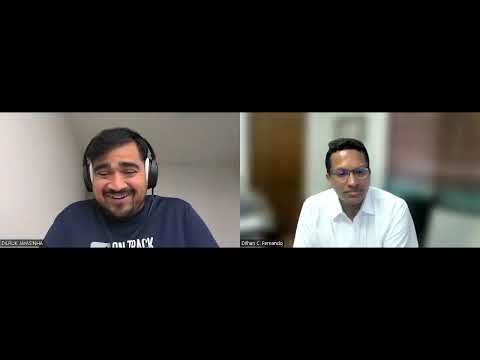
In conversation with Dilhan C. Fernando, Dilruk explains trials, tribulations and achievements behind his mission to make Australia laugh.
Transcript
This transcript was created automatically from the audio and checked for names. Minor errors may remain.
Over a Cuppa with Dilhan Fernando.
I deal with my therapist. But secondly, in terms of export, yeah, absolutely. I always proudly introduce myself as Sri Lankan born Australian standup comedian. And you caught me at the right sort of time in my life in the sense where I was 19 when I left Colombo to come to Melbourne to study. And next February will be 19 years since I came to Australia. So I'm actually at the exact half and half point of my life where half my life has been in Sri Lankan, half has been in Australia. And it's a really challenging identity acceptance, I guess, because I at times feel more at home and more myself here in Australia, but because of various skin color issues that I don't necessarily always feel that I fit in organically, you know what I mean?
And there's always a part of me that doesn't feel quite settled here. But the truth is now when I go back to Colombo, I am somehow seen as a foreigner as well, because my grasp of Sinhala started to wane over the years, like, because I went to St. Peter's College, so we studied in Sinhalese. So my technically first language is Sinhalese, but because I haven't used it that often for the last, you know, 19 years, that it's starting to sound broken. And, you know, it's like, apologies for this variant, but it's like the Kalapukasudha, like that's sort of what I'm feeling like. And when I walk on the streets in Colombo, there'll be Trisha drivers who pull up and try to, you know, negotiate with me.
And they said, like, where are you from? I said, how about the Indian? I said, their mind is completely blown. Why is this foreigner suddenly speaking Sinhalese at them? So I definitely feel this strange, I guess, split inside me, but I appreciate being referred to as an export because I don't want to lose that Sri Lankan side of me as it's where I feel like, you know, everything starts for me from there. As much as I'm taking my life in this different direction, that's out, especially in terms of comedy, operating outside of Colombo Sri Lanka, that I still want that Sri Lankan identity to be close to me as much as possible, if that makes sense.
That's fantastic. I had the same debate constantly with a friend whom actually who was there on that wonderful night when I first heard you in Sydney at the Love of Sri Lanka event, Peter Kuruvita. So I tell Peter, he's on loan. And so I guess that now we can rephrase it, no longer an export, but on loan to Aussie. All right. Okay, right, right, right, right. So it's still payment due back to Colombo. Absolutely, absolutely, like every Sri Lankan. And you know, that brings me to what I wanted to talk to you about because we're in challenging times. We're in really crazy times, but the perspective that my father has shared with us, which has really stood us in good stead, is look beyond the crisis.
And I think Sri Lanka has so much incredible talent, people like you who are going out and talking about our nation, contributing through your participation at events like Love for Sri Lanka. What's your perspective on Sri Lanka's future, what we can achieve and what we have in terms of potential? That's a very difficult, heavy question for me again, Dilhan, because firstly, thank you. I really, really appreciate you including me in the list of people that you've interviewed, including quite influential people from Sri Lanka. So it's firstly an honor that you've had me on the podcast and you value what I have to say as being something worth bringing to your listeners.
So pardon me if I feel like an imposter, first of all, when you asked me that question about the future. And the truth is this, I think I am racked with guilt. There is a feeling of survivor's guilt that I have right now, because, especially if you look back at 2022, what was happening in Sri Lanka. My mom and dad still live in Sri Lanka. My brother lives in India, in Mumbai, and he runs a very successful web blog teaching people how to speak Sinhalese. So he has a website called Lazy But Smart Sinhalese and he's bringing the language to a huge audience around the world.
And they're so involved in Sri Lankan, Sri Lankan-ness, right? And being proud Sri Lankans. I, on the other hand, have spent 19 years away from all of that, even though here I brand myself as much as possible in terms of as a Sri Lankan comedian in Australia, I feel guilty. I feel guilty that I'm not doing enough. I feel guilty that I don't know enough about what's happening. And I feel like there is an element of, especially because last year, this past year, I had a lot of big career milestones, whether it's in terms of things that I got on television or the standup audiences that were coming to see me.
So my life was starting to go up, but at the same time, every night or every morning, I'm waking up to messages on WhatsApp from my mom and dad saying they had a power cut that went for 10 hours, you know? And they can't get milk powder. So one of our cousins had to go drop off a milk powder. So for me, I genuinely broke. That's the best way to say it. Like I just went, it's all too hard. I don't know how to deal, I don't know how to balance the two things. And so chatting with my psychologist afterwards and stuff, I sort of got a chance to regroup and I realized that, okay, I have a platform here in Australia that maybe that Aussies listen to a great extent, not necessarily massive extent, but to some extent I have a way of reaching people, right?
And so at the very least, what I can do is use that platform to bring some information back to the Aussies to see how bad the situation is. Like for example, something that breaks my heart is that whenever that whole stuff that was happening back in Sri Lanka was brought to me, it was in the context of people jumping in the swimming pool and they framing it as kind of a comedic thing and saying, oh, you know, they had a big pool party. And I was really like, I don't want to use the word offender, but I was just kind of hurt that the full story got narrowed down to that one comedic moment or that they perceived as comedic and thought that I was going to play up on it, you know?
And I was like, no, no, actually, this is a pretty tragic situation that's happening over there. It's a sign of how desperate people got. And I said, these are not like strangers to me. These are my mother and father and everyone else. Literally, there's no other family that I have here in Australia. So everyone that I grew up with is back there. So for me to talk about the future of where Sri Lanka is a difficult answer because I'm very challenged about the present and what role I can play in that future. Do you know what I mean? So for the moment, what I'm narrowing my focus on in order for me to continue breathing easily is to go, okay, what can I do right here, right now that can help the country with the tools that I have?
So the event that you're referring to was Love for Sri Lanka event that was held in Sydney that where you got to see me. And by the way, just side note, I am sipping on some Dilmati here with my, which I got at the event, the Aruna Strong one. So it's very much on brand. And so the truth is, I think about the future, I don't know, I'm very scared. I'm very genuinely riddled with fear, but I still carry hope after events like that. We see there's a genuine need for people, sorry, genuine attempt by people wanting to do things better and wanting to make a difference.
And I think one of the silver linings is that this is transcended religious and cultural differences. And it's sort of uniting people a bit more regardless of what their beliefs are or where their heritage is or whatever, it's like, we're all Sri Lankan and we just need to try and pull us through this because it's just devastating. So the future, I don't know what the future holds, but I'm still having some hope, but I'm still having some hope left. What you're doing is amazing because you know what happened in that one square mile, literally, of course, it was a manifestation or expression of what was happening elsewhere in the country.
It was phenomenal, but it's been portrayed. It was portrayed by the media as a conflict, as not as a protest, but as some sort of war. And last week in Europe, I was asked, how's the war going? This is our biggest challenge. This misperception, whereas Sri Lanka is warm, it's welcoming, it's amazing, but it is tragic to see this beautiful hospitality going waste because there's nobody in town right now, but that's changing. And that's changing because of people like you. Yeah, like I said, I just got back a couple of weeks ago and I tried my best to kind of, again, just pause things about saying, hey, now is a better time than ever to go back to Sri Lanka and see these places because it's not crowded.
You can actually get to experience some amazing culture. We have 2,000 plus years of history. That's not even like, that's just a drop in the history of what's for some parts of the world that people travel to. I'm like, just go there and see how all this, see what it is and the statues in Polonaru and things. It's just, yeah. So for me, I'm trying my best to kind of at least be a messenger of some sort, you know? And you know, you're so right. When Arana, the Ayurveda inspired herbal infusions when we were doing the background research and went back to the first hospital in the world in recorded history that was established very close to Polonaru.
Really? I didn't know that. It's incredible. And the 3,000 year heritage of healing, of natural plant-based healing, of working with the biological action, but also so sustainable. What you see is very much what should be in future because you see people living in perfect harmony with nature and each contributing to the other. So nature giving us the health, the wellness, the taste and so on. And it's a beautiful thing. So what you're saying is absolutely, absolutely spot on. But yeah, so Sri Lanka. So then if I were to flip the questions back on you, then in that case, like if you go, because I feel like you have more A in Colombia.
You're on the forefront of it. You're not just on the forefront of what's happening, but also you're thinking in terms of this broad term of kindness, of being how can we be better as a business, but also as a family business, that's how can you provide more and the concept of kindness bringing in there. So in those chats that you're having around the world with different people, what I suppose is what are the things that you wished more people knew about that say maybe when I get those, if I'm in that situation where people are asking me about the country or whatever, that what are the misconceptions that people are having that you wish, oh, I wish more people knew that this wasn't happening.
So is there anything that you have come across that you feel? As you said, they're calling it a war, but it's not a war. Yeah, but also I think it's a message to ourselves as well, because if you look at business theory at the moment, most people embrace what Friedman famously and stupidly said that the social responsibility of business is to make profit. Whereas now this is a time, my father's philosophy was quite different. It was a family business serving humanity with kindness to people and nature. And it is now, it is a time such as this that we have built our reserves for. It is a time such as this that businesses operate.
I have a network. I can talk to Dilruk Jai Singhhar in Australia and I can share thoughts on kindness, on I can share good messages about Sri Lanka. And we have a network. I can access biologists. Yesterday I was on Dankal Day State. We were talking about food security, what we can do in partnership with life is we're bringing in expertise from around the world. So we have a network and as a business, what I wanted to explain to businesses around the world, we have a unique blessing and capability. That means we can reach out to people, we have networks, we understand how to frame a problem, find a solution, refine the solution and improve, ultimately deliver something positive.
And that is not only for the one dimension of value. If you look at capitalism, it's about the creation of value. But if you create value in one dimension, that is the economic dimension and you externalize nature and people, you're not creating value, you're actually destructive. So the principle is look, whether you're in Australia or in US or in Sri Lanka, now's the time that businesses need to contribute and to help build value, social, economic and natural. That's really the long and short of it. And I suppose the misconception or the error is thinking that social consciousness is perpendicular to profits, that you somehow need to sacrifice making money in order to provide for people.
But the truth is if you frame it as value and the most successful businesses in the world consistently focus on value-driven as opposed to profit-driven. And it's fascinating how there are still people hanging onto that old idea of money at any cost as opposed to value. And that's criminal. But so I've got to soften the thing now. I'm sorry, I've answered your question and made it very serious. We're talking about fun. So I want to ask you a question, I was watching you on stage that day and I was thinking that so many people try comedy. Some people think they're good at comedy, but they're not really.
You are outstanding the way you took us on a journey and how you brought us to a crescendo in a very short space of time. When you first came on, I was thinking, oh dear, this could go really well or it could go really badly because I've heard lots of comedians and very few manage to, my wife often says, look, in a speech, you either land the plane or you crash land. So I mean, you manage not only to land the plane, but you did it with the finesse. So what does it take? I mean, does it take a lot of work behind the scenes? Does it take ingenuity?
Does it just come to you? Firstly, thank you. That's a very, very kind assessment of that evening. I think it's, if people knew how much effort it takes to make it look effortless, it would be very heartbreaking. Like the amount, like you saw, I think maybe 10 minutes or whatever. I can't remember what I did, but all of that, it's years worth of practice and then finesse and trial and error, trial and error, trial and error. Because I would say the first three years of my comedy career was not good. Like I would barely get a laugh, but what I knew, what worked for me then was being comfortable with having a realistic look at myself.
So the one thing I would look back and when I started was that I was very unrealistic about the future, but realistic about the present. So unrealistic about the future, meaning that I had hopes and aspirations that were far beyond my skill level right then. I was like, oh, one day I'm gonna be able to do this and this and this, and I shot for the stars. But, and I still do, even though I feel like I'm quite content with my career right now. But I was very realistic about the present, which is I am not good at this. I'm really bad, but I can only get better if I keep working hard.
And so being able to use those opportunities to listen to the feedback of a gig that went bad, I listened to a recording of it. And if it was bad, I'd make notes and try something different. If it still didn't work, try another thing. So constant, so we're talking 12, I started in 2010. So nearly 12 years worth of behind the scenes work that I guess you saw in that 10 minutes. So the material itself was written in the last year or so, you know what I mean? But the actual, you know, the delivery and persona that took me years and years because it's not something, as you said, something that was came natural to me.
In fact, I don't think I genuinely say it with pride that I don't think I'm talented at anything, which is that if talent is something that comes naturally to you quicker than say it would most people, I genuinely don't have a talent because everything that I do, that I think I do well today, I was really bad at it to begin with. And it became better purely by working hard and being able to stare, you know, nakedly at yourself and not be embarrassed about how bad you are so that you can improve. So I hope that answered the question being that, does it come naturally to me?
No, absolutely not. It took years and years of hard work. You're selling yourself short, Dilruk, because people today say that I'm a half decent tea taster but it took me 20 years to work on it. So you've done your vocation in half the time, so I think you've done it. I know, I appreciate that. That's very kind of saying. No, yeah, I think, no, I think the point mean like it is that thing of people, the misconception that it looks like I walked on stage and then these just came flying out of my mouth, which is the opposite, which is that, you know, some of those stories or the bits that I did were initially just ideas I scribbled on a notepad, then I would go to an open mic night where there's maybe five or 10 people and test it out in front of them and then refine it and then bring it to another place and another place.
And then over months build it to that point where it's a bit more bulletproof in front of a big crowd like that, you know what I mean? So I guess that's part one. I appreciate you saying, selling short, but yeah, what I mean is more that not the execution but the work that has to go into it is a lot more, you know, disappointing to find out how hard it is. What you say is music to my ears because one of the things that you learn in family business is that humility is as important an ingredient of success as the wisdom and all of the other things that it takes to contribute to success itself.
So I'm sure you're gonna be very successful, but I have a final question. What has been your most spectacular crash landing in terms of jokes? Right, right, right, like a bad gig, you mean? Yeah, I mean, no, no, not physically, but in terms of your events and your jokes and talking about comedy not going well in the early years. Not going well, oh yeah, yeah, absolutely. I've got plenty, plenty of stories. I mean, do you have four hours? I can go through all of that. There's so much to draw from.
I guess, well, I will get into that, I'll happily answer that, but while I formulate that, a good story to tell you, can I ask in return, I'm very curious about the, there's genuine admiration from me seeing how Dilmah has operated as a family business from starting with your father and now you as well taking over. And by the way, for years people told me that the Dil part of Dilmah was Dilruk. And then I find out this Dilhan guy is not Dilruk. And I told, you know how many Aussies I've told that story to? I said, yeah, Dilmah is named under Dilruk. So I'm sorry that I misled that.
Which by the way, also a side note, again, this will connect actually, this actually connects nicely to your story, your question rather, sorry, which is about things going badly. So a lot of the time, I would say 90, 80% of the gigs are good. But when you're trying new material out, you have to accept that it's gonna go bad, right? And so a lot of the time when I'm testing stuff out, I might be in a small sort of smaller town, maybe like not in the main cities or something like that just to test it out and see how it goes. And unfortunately what that means is I might be in a town that has little less sort of cultural, well, how do you put this likely?
Knowledge or finesse of knowing how to operate. So they tend to make jokes in the racial connotations. They think they're meaning well and they're just being funny, but sometimes they can be insensitive. But one of the ones I have gotten since I was 19 after arriving in Australia in 2004, is from Dilruk, my nickname became Dilmah. So I've honestly been nicknamed Dilmah so many times that I might as well start doing a campaign or something with you guys, because it's almost like I need to reclaim the name Dilmah because that's what I get called anyways, because Dilruk is so close to Dilmah that they tend to say things like that.
So for me, so my question to you was initially was gonna ask about the idea of a family business. Now, how have you found, what do you think you did well as a family to be able to navigate the complexities of business in that without it letting falling into the thing of like, you know, softening it cause it's my dad or from your perspective, the pressure of having the legacy of your father, what he left and everyone now looking at you and comparing you to your father, how did you navigate those kinds of challenges? Because that'll be fairly unique to your business compared to say someone whose predecessor was just another person as opposed to their dad.
You know what I mean? Did you have guidance? Was it always like a thing where you and your father kind of once you were brought into the business, it was seen as you are the successor. And so people were respected that. Every generation has its role and function, Dilruk. And I think in my father's case, it was the toughest one, which is coming into a post-colonial economic system and completely disrupting it. In fact, I calling the original disruptor because what he did was he transformed an economic system that said, look, you guys make the tea. We take it across to London. We sell it, we make the money and we'll send you a little bit of it, you know, if you're lucky.
My role has been to evolve that, to look at innovation, to look at different aspects, tea gastronomy, tea mixology, but always respecting the core values. The core values are honoring tradition, honoring freshness, ethics, et cetera. But also the most important thing that my son having joined six months ago, freshman trustee, you know, he's 21. And asking resonates because the most important thing that you have to pass on is that philosophy is understanding that this is what your grandfather wanted, that he wanted to serve humanity with kindness to people and nature. So what you do, the lives or the survival, that's maybe an exaggeration, but the welfare of 15, 16,000 people on the plantations, the welfare of 100 and something thousand people who benefit from our foundation depends on what you do every day.
Understanding that responsibility then allows you to frame your business and say, okay, this is why we need to make sure of stability. This is why we need to grow. And at the beginning of crisis, I can, as an example, when I went to my father in March, 2020 and said, look, we're gonna go in for some pretty harsh headwinds, he just told me one thing. He said, look, protect my people. Everything else, do what you do. So we couldn't, or we didn't want to, of course it wasn't our philosophy. No one could go home, zero layoffs, zero reduction of salaries, zero changes in strategy. Everything had to go as normal.
This was the toughest part for the two years. But I think the most important thing is to share that philosophy. And my father, my father achieved something phenomenal that I can't dream of achieving. I do something different. My son, with his stick talking and new way of communication, but always remembering, respect what's at the heart, respect the feeling. Right. So that's so clear to me. The idea that there is a clear, consistent vision or purpose that is not just a banner that's at the entrance, but it's something that was held onto almost like a precious gemstone that you pass on from one family member to the other.
But continuing to remind everything, every decision comes back to that one idea, that one concept about how this is providing for the people working for you as well. And that's clear. That's clear. The fact that you know that means that that's how then every decision then comes back to that. And that's what makes the, as tough as it would have been or where the numbers would have driven you to have layoffs or salary reductions and things like that. By having this gem sitting there, you go, no, no, no, we can't break that because that's what we stand by. That's everything. That's a core value there. So then I guess my follow-up question is then, how do you then challenge, it would be very challenging, and I just know how humanity works, that no matter how kind and kindness being the theme of it, that you have that kindness mentality, there is still gonna be a tiny, tiny percent of people that take advantage of that kindness
or don't appreciate that and try to almost muddy something that's quite honorable and beautiful. How do you maintain that philosophy in spite of having maybe necessarily people not respecting it or not reciprocating it? You do the right thing. And when you have opposition, about five years ago at a board meeting, there was a UK fund that stood up and said, why is it that you've assigned this 400 million rupees to supporting people, we object to it. So my father stood up and he said, thank you, your objection is noted. My family and I own 80% of this business and whilst accepting what you say, we will do the right thing.
So he was able to, steamroller is not a nice word, but in this case he was able to stand for what is right. And there are too many people who want simply to extract the profit. But our reality is that for our employees, for my son, I mean, why would a 21 year old graduate in the UK come back to Sri Lanka at the peak of its crisis? Because we are not simply a business, we are a cause. There are so many people that depend on what we do and we have to make sure that not only do we fly the flag to Sri Lanka, but we make sure that, hundreds of thousands of people around the nation are benefited by our centers and so on.
And that's something that is quite precious. You know, it sounds, it begins to sound a little cliched when I say this, but it's really a heck of a responsibility, but it's a good one because it broadens your perspective. I mean, you know, our jobs here in the business is as much to run. I mean, we run, we have 82 schools, we have hospitals, we have care for disability care centers, we have centers around the country for women, we have culinary schools. It's fantastic, it's the most enlivening and really enabling environment in the world because you're involved in so many things, but you understand the core principle.
Success is one thing, but significance is what lies beyond success. And when you really understand that it is significance that we must aspire to and not be satisfied with success, which is a temporary and fleeting thing, then you've got a real understanding, a comprehension of what family business is about. That is what I aspire to show my... So I think I understand. So in that context though, what does significance mean to you? What do you mean by significance in that sense? Significance means that the day I close my eyes, there's gonna be people saying, you know, his family, his father, what they did to touch our lives rather than to enrich themselves.
I mean, success, I don't know, of course you hear about these people who make gazillions of cash, but really, do you respect them? Do you appreciate them? I mean, is that significant? So when they close their eyes, I guess they can look back, but it's like Sam Walton's famous saying that we're at the end on his death bed, he grudgingly admitted or not grudgingly, but he admitted that he had it all wrong. And you know, there was no relationships, there was no fulfillment, because ultimately- I was gonna say, I use the word fulfillment, because I think that narrowly is the one that, because success can be anything you decide is your metric of success.
You know what I mean? Whether it's financial goals, whether it's quantity or quality or whatever it is, you get to decide what your success looks like. But really what we all should be focused on is what gives us fulfillment. And almost not, almost recognize that that fulfillment is gonna be different for some people than it is for you. Like, you know, for some people, the fulfillment is seeing the success of their children. You know, wanting to put as much, you know, I know my parents made so many sacrifices in their lives, and, you know, maybe lived a life that wasn't to their best because they were making sacrifices for me and my brother, but they got such fulfillment by seeing us then thrive because of the sacrifices they made.
You know what I mean? So it's that thing of like, you know, my mom didn't work, but she's as far as I'm concerned, and this is very arrogant to come from her son, but I'm like, she's one of the most successful people I know because as her role as caregiver and mother, the amount of important lessons she instilled in me, some of them are not even by design, just by accident created such a great modus operandi for me, like, for example, with studies. So my brother and I were both, you know, straight-A students and things like that, but along the way, we were rewarded before the results came.
She was like, if you study hard, I will buy you this video game, or I will buy you this Ninja Turtle or whatever. It's not about, she goes, regardless of what you get in the actual exam results, I don't care, but if you show me the work, I will reward the work. That's very cool. And that is exactly the blueprint that was there for me as a stand-up comedian going, the work's terrible, I'm bad at this, but I'm gonna, sorry, the result is terrible, but I'm gonna put in as much work as I can because the reward is in the work itself, right? So that fulfillment that you're talking about is incredibly powerful.
And I think people, you know, I wish more people recognized what, started to question what they consider is successful and then reframe it as being something that gives them the most fulfillment rather than necessarily the biggest bank balance. Absolutely. But I think you have another skill because you've been evading the question for us. Oh, sorry. No, no, no, no, no, absolutely not. No, I'm kidding, I'm kidding. Sorry. I'm just, I think you know what? I have to say, I love the story about your mother. And I'm gonna repeat it to other people because that's what we all say. But what you just mentioned is that that's what she did.
And that's fantastic. Yeah, yeah, yeah, yeah. I'll never forget it, which is that my, and to be honest, my dad wasn't sure because I was like, I always, he was in 2001, just finished my Ollivals. And mom was like, oh, we need to buy him a new computer or buy a computer because my brother took the other one when he went overseas. And my dad was like, but the results aren't in yet. He's like, that doesn't matter. He worked really hard. He needs this reward. And then knock on wood, sure enough, I still got 10 Ds. But it was the fact that I was able to check my Ds results on the new computer was meant a lot to me because it showed that she appreciated that I put in the hard work.
And hopefully the exam will show those results which it did in my case. But at least I knew that she had my back as long as I put in the work, you know? For the benefit of our European viewers, you need to explain that D is for distinction and not D as it is VD. You're right, you're spot on. I completely forgot that D could be in the fourth place. Sorry, this was top grade, this is top grade. But to answer your question about my bad gigs. So there's plenty that come to mind. So I can go down the more heartbreaking ones which are the more racial ones where I got on stage in Go Coast, you know?
And it's about 40 minutes I needed to do. And it was this hub that was really badly set up. Everyone was really drunk. There was like a betting machine in the corner that was going off. There was a 40th birthday party happening. It was really rough. And within three minutes of getting on stage, this drunk dude in like a footy jumper said, piece off stage you curry munching prick. And like, I can't quite tell you the sad thing. The thing that's so alarming to me about that is he didn't technically swear. There was no bad words in there. But the venom in how he spat it was so, so like filled with hatred that it kind of broke me.
But I didn't show that break. I held it together because I'm, you know, the description that someone's given is that you're the captain of the plane. You need to, you know, as you said, land this plane comfortably. So I can't show that the storm that's hit me and the turbulence we're going through has affected me. So I held it together and I was, you know, taking him down and stuff. Eventually he was embarrassed. So he got up and left and, you know, I kept having to put out different fires and held my own for 40 minutes. And then I said, all right. And I kept sort of counting down.
I saw another comedian, Bill Bird, do this where he was having a rough crowd. And he goes, I got 10 minutes left. And he goes, I got seven minutes left. I got four. And he just kept counting down. And he would do a bit and say, two more minutes to go. And like things like that. So I kept doing that. And so the crowd was now starting to turn and become back on my side. And so when I said, okay, that's it folks, that's my time. There was this huge applause from this small group of people, but even a standing ovation by a couple of people.
The only time I got a standing ovation because I held my ground, right? I refused to back down. But here's the thing, Dilhar, as soon as I walked off stage behind the curtain, like it's not even a proper stage. It was like, it's just this banner, right? That's how badly it was set up. I turned and as soon as I hit that darkness where I was not in the view of anyone, I fell to the ground and started shaking because my whole body was holding that tension in for 40 minutes that I just uncontrollably, like my whole body was shivering, even though I'm sweating at that point because I was taking the breath.
But it goes to show you just how that flight of flight part of your brain like keeps it together when you need it or needed it when I needed it too. It kept it together and showed as if there's no fear. I'm not afraid of you. I can take you all down. Then as soon as I walked off, bang, I was gone. I was a mess. I told the book, I was like, man, just put me in the car and get me the hell out of this chokes because I don't want to be here anymore. So, you know, that's probably a really good example of how much it can undo you.
You know what I mean? Well, that probably strengthened you. I mean, they say fail fast, learn fast. I'm sure that was one of those occasions. Well, that one was an interesting one. It was hard to extract what the lesson really was. I mean, I think it's a really good example of how it's going to be able to do that. I mean, I think it's going to be a pretty good example of how it's going to be able to do that. I think it's going to be able to do that rather than maybe have confidence in myself to know that if it happens again, I have the ability to hold it together.
But another one, I'll give you another example which was back in 2013. So this is still in my head one of the worst gigs I've ever done. So my first ever gig was the 21st of September, 2010. Three years later, I'm at the same comedy club that I first did my open mic thing in front of 20 people. Now, three years later, I'm the support act. So I'm the middle act doing 20 minutes. It was the first time those guys were going to be paying me after years of putting in the hard yards. They're like, hey, you're good enough now to do a paid gig. So I was in this space of complete gratitude and complete like just joy of the fact that, quote unquote, I've made it even though it's like only the support spot.
But that was a big hurdle for me. And I was so proud that I achieved it, right? So at the start of the show, I walked out and I got like, there was something about the aura about the way I walked on because I was in such a place of gratitude that the audience subconsciously felt it. And it was the best start I've ever had to a gig. Like it was a Saturday night and it just was like, oh my God, like this crowd was like eating, you know, a candy out of my hand. Like I was like, I'm in control of this. And then at the seven minute mark, I got cocky.
And I was like, you know what? I think I can try some new material here because that's how much these guys are loving me. And I shifted gear and did this bit that was just very un-bought through and probably maybe something without getting into the details of it. It was a little bit too advanced for someone at my level three years in to be able to, there was a concept around ego and how, you know, even though I was obese, I still have a big ego. And it was just this really complex plate-splaining, which I, you know, appreciated my version of myself, you know, attempting something like that.
However, the bad thing was I attempted it with arrogance and entitlement to their attention. I'm like, well, they love me. So I better, I can easily get away with doing this. And they hated it and they turned within five minutes. So I had a 20 minute set. I did seven minutes that went well, five that backfired and I still had eight minutes to recover. But that five minutes was so bad that eight minutes was just like people started talking. I could feel the sweat just drip into my eyeball. And I walked away. I didn't even feel like I deserved to get paid because of how bad that went.
And that gig went so badly on that Saturday. I was still working as an accountant. And on Monday, I called in sick because I was like, I can't come to work. I'm still recovering from how bad Saturday night felt. Because in my head, I was so down about it that I felt like if I got out of the blanket in bed, somehow that gig was a reality. But if I stayed under the blanket, then it's my little cave, my little safe space. So for me, the lesson there was about respecting the audience and never feeling entitled to their attention, no matter how good your gig last night was, or even in my case, even how good the last minute was.
Because it was incredible. Like for my standard at the time, it was really a great start, but it didn't matter. Because if you don't keep delivering, people will only judge you for what you immediately are making them feel. They don't care too much about the context. Maybe they'll give you a little e-way, but if you don't recover quickly, it's a long road ahead. And what that taught me as a lesson was just never disrespecting the, well, few things really, the power of gratitude. As soon as I showed up with a sense of gratitude and gratefulness for being there and achieving these goals was what made the gig go well.
Where I went wrong was the entitlement that I felt afterwards going, I don't need to be grateful. You guys loved me. And the cockiness that kicked in. And so I'm proud to say at that particular comedy club, I have never had a bad gig on a weekend since because I never disrespect that crowd anymore to know that just, because it's a 400 seater. There's a lot of people you're trying to maintain their energy of. So I was like, that was something that I learned pretty early that I think has helped me kind of stay humble throughout the performances since then. You look, you really do make it look effortless, but you've given me respect for you.
You're one of Australia's most well-known and appreciated comedians, but I'm so glad that you never forget that you are very much on loan from Sri Lanka. And I love that. You know, your experience with your mom and dad has really formed you and refined you. That's awesome. Now, on the next occasion that you're visiting Sri Lanka, I need to see you. We need to have a chat. It would be my absolute honor. It would be my absolute honor. I should be back, I think either. Sadly, I come back normally every Christmas, but this year the ticket prices are so high, which I don't understand. So I'll be spending Christmas in WA with my girlfriend's family, but I will be back hopefully in May or June next year for sure.
And vice versa, if you're ever in Australia as well, please let me know. I'll make it a point to make sure we catch up for... I don't know if you've tried this brand called Dilmah. It's very good tea. You should try it sometime. I have. It's funny to see. It's not that they have here, you know, but give it a shot. But, Dilmah, thank you. Thank you so much for spending time with us. It's wonderful the insights you have shared. Well, it's my absolute pleasure and honor. So thank you as well. And thanks for taking the time to answer my questions as well. I appreciate it.
Thank you, Dilmah.