Tea Inspired Mixology with Alberto Pizarro
With Alberto Pizarro
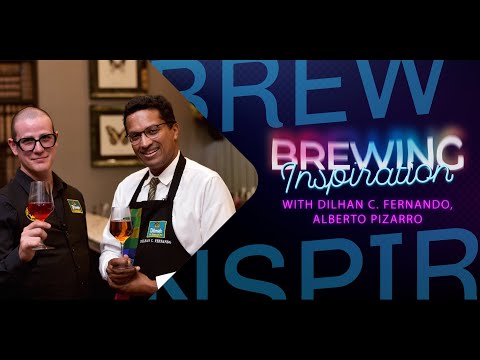
About this episode
Great with food, brilliant in drinks – mocktails, cocktails, and pure tea served iced or hot. My conversation with extraordinarily imaginative Spanish mixologist Alberto Pizarro was tea, and beyond.
#TeaInspired #Bartender #Mixologist #Ingredient #Drinks #BeverageTrend @Dilmah, #AlbertoPizarro #beverageinspiration #Teatimerocks #CeylonTea
Transcript
This transcript was created automatically from the audio and checked for names. Minor errors may remain.
My guest is Alberto Pizarro, all the way from Madrid. Alberto is an incredible mixologist, an expert in gin, and now also inspired by tea. Alberto, fantastic to have you on the show and to have a chat, tea-inspired chat. Yeah, I'm more than happy to be here. How have you enjoyed Sri Lanka so far? It's my second time in Sri Lanka. I'm not having much time in this occasion because I'm doing a lot of tea cocktails and mocha for our guests, which I'm very happy to do, but years ago, when I came here, I discovered an amazing land full of nature, elephants, animals, all sorts of spicy food that I love, so that was really my best time.
So I still have a little bit of time to enjoy this time. And tea? And tea. So tell me... Lots of tea. I like that, I like that. So tell me, in the world of mixology, we hear that tea cocktails are trending. What are the big trends? Is it low ABV drinks? Is it non-alcoholic? What's happening? Well, now you want to get a successful bar, not specifically talking about cocktail, but talking about bars.
Bars need to be a place where photos could be taken. Like Instagram is a powerful tool. Before we had tools like Shake, that was good for our work. Now a powerful tool is the social media. Social media is very important. Nobody is going to post a bad-looking photo of a bad-looking cocktail. So you need to impress them at first sight. Then, taste will come. And the taste now, it's more and more important because people are used to try different foods, different beverages. So people have more culture about ingredients. The library of flavors and smells is bigger and bigger. So you need to impress them with new flavors, orange juice, pineapple juice, and maybe a little bit so common nowadays.
You need to impress them with different ingredients, different teas, different infusion, different fruits, different spices, different everything. And it's a good question about the classic cocktails because if you go back centuries back, the first cocktail, you know, contained tea. Tea was a substitute for many other ingredients because it gave the texture but gave the content also was a more or less cheap ingredient if you compare it with expensive wines or liquor. So it was a way, a very convenient way of giving flavor to drinks. We won't say cocktails at this time, but drinks. Punch, for instance. Punch is the classical drink full of tea. And okay, all this disappeared in the 90s where cocktail was about grenadine, blue curacao, all these ingredients.
But then that around 2010, a little bit earlier, group of mixologies, especially from cities like London or New York, went straight to have a look at what the special teas could find and included in the recipes from there. From there, we have this trend of using tea mixology. So we're here at the Grand Hotel in the heart of Sri Lanka's hill country. Here's the place where you have beautiful golden brews, light, bright, quite sparking and energetic teas. And you've got at the other extreme, down by the ocean, by the Indian ocean, you have the intensity of our low country teas. So with all of this, you talked about texture and flavor.
With all of this, do you find that tea has the versatility that you need to cater to this new generation of cocktail drinker? Sure, because tea is not tea also, but not only, but also tea. For me, each tea has a different storytelling. And the first thing that I do when I have to think about the recipe, is look at the tea infusion, in this case, blue dorancia nucalyptus. This tells me a different story than almond infused sellum. That's different. In my mind, this maybe takes me to winter and this takes me to the Italian coast. So I can start working with Prosecco, with Aperol, with an Italian spirit.
And I still haven't even tried the tea. But the story tells me the ingredients. Here I will go for more robust, for more oak barrel. Let's go for a rack. Let's go for whiskey. Just because it's almond. Just because it's an spice. It's different than a fruit. So each tea inspired me in a different way. That's why it's so versatile. It's one not just talking now about green tea or black tea. But even with different texture and different flavor, you have different ways of using this tea. You have strong, very strong breakfast tea. You're not going to miss it with vodka. You need to keep the strength of the tea with some very intense spirit.
That's going to my mind. You can do the opposite. You can break the rules also. But my first thought always is about what's on the label. What's the name? What's where it came from? What is infused with? And then I start tasting. And then maybe my mind change. And I go for in a different direction. But this is my starting point when I think about the tea. Tell me a little bit about your technique because you can cold infuse tea. You can brew it strong. You can brew it into an essence. What do you like? All this. But also you need to try different techniques. Like today I got a new idea.
Why not infuse? Okay, you're going to taste that in a few hours. Why not infuse egg white? And then you shake an egg white in a cocktail. But it's not tasting and smelling like egg white. But it's smelling like lumps and suchon egg white, for instance. Why don't you have a very strong, overproofed room? And instead of reducing with water, you reduce it with green tea, for instance. So there is always new techniques that you can explore. Apart from the obvious ones. Infusing a spirit. Making a cold brew. Making a hot brew. Using it in a chai. There are many, many different ways of using them.
But you always can create new ones. Having ideas from kitchen. Having ideas from scratch. So in terms of using tea in different ways in a drink, of course you can use it in the liquor itself. But also perhaps as a foam and a rimming. Any other things that you can suggest that we can think of in our mixology, tea mixology? You should try, try, try and try. You should try and of course we have some obvious combinations that we know as well. Orange and cinnamon, for instance. That's very common coming from the kitchen world. But why not try new things? Why not try in different combinations every day?
It's like when you have an open bottle of cherry wine in your fridge. That you know this is going to last like between one and three months. And you open it for having a meal with the specific food pairing that everybody knows. Like dry cherry wine with ham on ham. But day after you still have the bottle and you order a pizza. Why not try it if this works as well? Day after you will make a pasta. Try it as well. So try, try, try. One is the obvious. You know this is going to work. This is boring. Work without risk is boring. So you need to take the risk to order a barba coa pizza with a dry cherry.
Probably it's not going to work in the living room. But who knows? So here we have the beautiful golden teas we talked of. Light, bright, little orky. What kind of drinks would you suggest that we use for this kind of no-reliant tea? Let's go for something that is complex but light. At the same time. Let's go for a single malt instead for a smoky whiskey, for instance. It's going to use some hints of vanilla, butterscotch. All these subtle caramel flavors strong enough to pair with the tea. But at the same time won't take over the tea. So we'll keep balance. But how? This is a good question.
Maybe in a syrup. So you enrich the tea. You make it more dense, more intense in the cocktail because sugar will push the flavors. And little ingredients. Sugar, the syrup, the single malt, little bit of bitters. Not a lot of ingredients in this case. Maybe top up with some sparkling wine just to make it even more elegant. So if you look at the opposite, the intensity and the bitter chocolate notes, the earthiness in our low country teas, how would you work with that? Is there a principle that we should follow as we explore? Which, my question is, which sort of a spirit is this drinker waiting for?
Probably not an strawberry. The person who used to drink this tea probably is into methyl, for instance. It's into a Jamaican overproof rum. So it's someone who really like taking this sort of risk in flavor. It's time for chocolate bitters, for instance. It's time for, why not? A fermented something. A fermented piece of fruit that you make a juice and the control. Obviously, we work with the fermented drinks and foods. The pache, fermented pineapple, very common in Mexico. Let's go for this sort of ingredients. I'm sure that the people who drink strong tea are ready for a strong spirit. And on the other side, maybe not.
But also, yes, why not? At the end, a dry martini drinker. It's subtle in flavor, but it's strong in a spirit. So why not?
Try, try, try offering. And then you will see the guest face. Adverse it. So you will see. If it doesn't work, we change.
But following some common sense rule, 90% of the times it works. Tell us some of the classics that you think could go well with good tea. One of my favorite classics is gimlet. I use green tea. Green tea with jasmine. All this sort of tea that we know very well with gin. Make a syrup with it. Not very rich syrup. Let's say two parts of the tea. One part of sugar. And in order to balance it, because it's not going to be more ingredients, you need a bit of citric acid instead of lemon juice that also will give some lemon flavor. Street it. And it's quite the flavor-forward drink.
Just two ingredients at the end. Fantastic. Alberto, I'll stick to tea. Stick to fusion. You have your infusion. Cheers, my friend. Cheers. Thank you. Thank you.