No greater chill than a good book and a great cup of tea
About this episode
Sri Lankan Booker Prize Winning author Shehan Karunatilaka on ghouls, politics, and tea, in conversation with Dilhan C. Fernando.
Transcript
This transcript was created automatically from the audio and checked for names. Minor errors may remain.
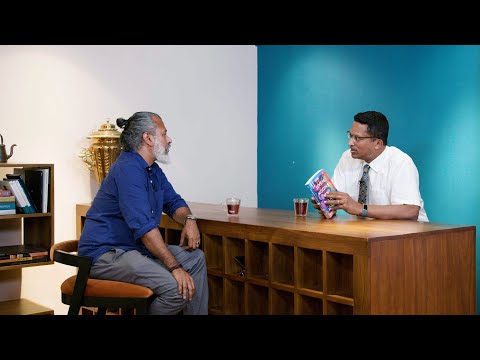
It's always good to catch up over a cup of tea, and there's something that tea goes brilliantly with. That's a good book. So today, I'm really privileged to have Shehan Karunatilaka with us. Now Shehan, I don't need to introduce Shehan, because you know him. He's won the big one, the Booker Prize. So Shehan, welcome. Fantastic to have you here. Cheers. Thank you. I hope you drink tea. Yes, I do. Brilliant. Lots of tea was consumed during the making of that. Yes. Now, this is not just a beautiful book. It jumps out at you when you go into any bookshop. But it's also a magnificent, complex, sophisticated tale, which is very original in the way you have crafted it.
Tell us how you came up with this. Well, I don't know. One sentence at a time is that that's usually how it's done. I thought I was just writing a ghost story, which essentially is what it is. My thoughts Sri Lanka has many stories, but we've also got plenty of ghost stories, and I thought I'll capture a few of those. But yeah, a lot of layers went into it. So essentially, it's a dead man trying to find out, given seven moons or seven days to solve their own murder. But then it goes, it's set in 1989, which we all remember, even, you know, we might have been young at the time, but seems a long time ago, but I just remember that time being quite a torrid time.
It's the height of the war, and we had the JVP insurrection and the Indian peacekeeping force on the ground. So I thought this would be a great place to set a ghost story because this character was involved with all these different factions and ended up dead. But that was just the idea. It took me about five, six, seven years to actually complete. So each time I'd add a new idea to it, more suspects, more angles came about, but yeah, finished it finally. I think you're doing yourself an injustice because it's much more than a ghost story. You have visualized scenarios in the afterlife. You have added depth to a dead person and other dead people.
So you've really achieved something quite extraordinary. I mean, do you visualize this? Do you, how is it that you, I mean, how do you see the the Mali Almeida's afterlife exist? How did you come up with that? Is it something that you dreamt of? No, if only you could dream a novel. I mean, I do dream and I do, but and I write down my dreams. These are all good techniques for accessing your subconscious, but it comes out as gibberish. Most of the time I'm just solving problems. So I knew, I mean, the idea was what if the victims of Sri Lanka's many wars could speak. That was where I want, because we have lots of competing narratives and we also forget very easily something, a new tragedy happens and we forget the last one.
And I thought if you allow some of the dead people, so that's why the original title for this was was Chats with the Dead. It was this war photographer interviewing different ghosts. But then I had to figure out what does the afterlife look like? And it's hard to interview a ghost, right? And it's hard to talk to anyone who's been there because not many come back. And so I had to, so I borrowed from a lot of topics. So this is also, you know, you spend a couple of years researching it before you start typing. And so I looked at what the religions had to say, what the philosophers had to say, near-death experiences. You had many cases of people dying on the operating table and they visualized this light, walk in towards the light and there's a guardian figure. So I, and Dante, also literature's got many, many theories of it.
But in the end, I was able to make up my own because all these sources have some certain common elements to them. But my idea here was that the afterlife is like a Sri Lankan bureaucracy, whereas, because we have this idea that you breathe your last, you open your eyes and all will be revealed, which is a nice way, you know, it's comforting. But I like to write absurd, strange stories. So I thought maybe it makes more sense. You wake up and suddenly you have a piece of paper that says, go over to that counter and get it stamped, but the counter person has gone to lunch. So you have to wait. And then all these spirits are confused over what their life was because also no one expects to die unless you live to a very ripe old age. I'm sure all of them who end up in this waiting room are surprised, you know, why 45 years? What was that about? And so this idea that this guy who was an atheist, that's the thing, he was
an atheist because he was a war photographer. He had seen so many terrible things. He was convinced there can't be an order to this. It's all random. And then he wakes up in this afterlife. So there was enough comedy there for me to explore, but it didn't come easily. It took many years of theorizing and figuring out when you're a ghost, what does a ghost do? What do you do all day? Can you go anywhere? Can you talk to the living? How do you move? So these were just aspects of when you're building worlds, you solve problems. It sounds fun and it is most of the time, but a lot of the time it's very hard work. You sit there wondering, well, that doesn't make sense. Can a ghost walk through walls? So this idea that you can only, you can go where your corpse has been and you can go where your name is spoken. And that was quite a nice way of solving a murder mystery
because wherever Mahali Almeida's name is spoken, he can go there and figure out, okay, why are these people talking about him? But also there was a meaning there that I think, regardless of your beliefs, that humans, you die a second time when the last person on earth remembers your name. And that's why many ghosts don't survive more than three generations. So there was a lot going on there. And I'd like to say that it came in a flash, but it was just painstaking writing drafts, rewriting them, figuring out what doesn't work. But in the end, I was quite fascinated with this character and I was quite fascinated with Sri Lanka and the tragedies we seem to get ourselves into. So that's what made me write it. I love the afterlife bureaucracy, the waiting room, the chaos that you portray. It's beautiful and it really adds so much depth to the book. But also the cover. It's intriguing.
Tell me a little about the cover. So this was Peter Dyer from Brighton who visited Sri Lanka during that time, 1890. He came as a young surfer. And he said, I didn't know anything about the politics, but I thought, what a beautiful country. And he remembered that. But the strange thing is with covers, with any creative visual arts, you go through a number of, you know, you get a first batch, you'll be like, maybe not quite. And go through about four or five rounds. And my wife's a designer, art director, and my brother's illustrator. So we got lots of critical voices. So when I show the cover, everyone's, this is the first time, first cover we saw, and everyone's like, wow, this is it. And I don't know. And this is a true talent, a true artist. He just said, I took the Sri Lankan devil mask, which I remembered from 1989. But then I gave it my own spin. And I think it just brilliantly captures the sort of the darkness, because it's a
bit sinister, but it's also got a bit of goofiness to it, which I think is the tone of the novel. It's a dark novel, but it's also a bit silly, a bit wise cracking, a bit, yeah, there's a lot of jokes cracked as well, a lot of dark humor in it. So yeah, this was Peter Dyer got it in one go. Shayan, so with social media, and with medium and all of these different platforms, we have all become writers in a sense, some good, some not so good. What does it really take to produce writing of this kind of standard, a standard that other people would want to read?
So get off social media is the first thing. So I've never been I tweet once a year, because, well, maybe twice a year, now I have a team, life has changed since October. Now I have people answering. But before I used to, because the reason is I want to tweet about a topic, I'll tweet, then I'll leave it, and then I'll come back the next day, I'll change it, craft it, and say, Oh, that doesn't sound good. Maybe it's more poetic if I put this word here. And by the time I've got the perfect tweet, it's like four months later. And Michael Jackson's death is like, no one cares about that. And so, so that's one of the reasons I've been off social media. But look, writing has different I mean, I started as a copyright I used to write advertising marketing, I think I did some work for Dilmah. So I've done all different types of writing and I've dabbled in journalism travel writing. It's all very
hard work. And especially writing a 400 page novel. For me, the the measure has always been even with my first first novel was doesn't you know, you can't predict if it'll be a bestseller or not, there are literally 1000s of books that come out and some very good ones get forgotten some not so good ones get elevated. So you can't control whether it wins awards or sells well. But what you for me, the measure is if a complete stranger on the other side of the planet picks up the book and has experience, regardless if they know about Sri Lanka or the first book was about cricket, so about left arm leg spinners, they don't have to know anything if they can lift it up and have a experience, because it's a human story. I think that's, that's the measure of a good book. And that's hard work to do, though. That's really hard because you may have an idea, but you need to craft it in a way and make the tone
accessible. And that is just getting up every morning. I tend to get some people work at night, some people work while the kids at school. Me, it's early morning. So wake up early morning. And yes, I make myself a cup of tea. And at that time, social media is, there's no, your phone is not pinging. There's no one on Facebook. And so you have those three, four hours wonderful time to just get into these strange stories and to into other characters heads, because that that's what writing really is, I think. And even reading to extent, it's a way to get out of your own mind and get into someone else's head and see the world from their point of view. So yeah, what it takes to write something like this. Look, we are all, we are all photographers now after the iPhone came out.
We are all filmmakers, writers, artists. And I think that's how it should be. We are all creative regardless of your job description or whether you have long hair or beard or I think we have the creative impulse. So I think that's fine. But I think to get a book that like that measurement that I gave that are strange, you can have experience with. You need to, it's not just being creative or being talented. You need to sit there and craft it daily for as long as it takes. I hope that I could write a nice 200 page book in a year or two. I mean, this took seven years and it went from 600 pages to 400 to whatever the page count is now. But I like having done it. Once it's done, it's fun. When you're doing it, it's it can be quite agonizing. I was amused that some of the people that you indirectly refer to in this book, indirectly in the sense that maybe they were involved in the politics
behind it, were heaping praise on you and in social media and saying what a great achievement. But I figured knowing some of the politicians and their average intellect that they had probably not read it. But of course there are certain exceptions and I'm sure they had had a look through it. But were you amused by some of these comments where there were people without realizing of you know heaping praise upon your amazing work but not realizing what the actual context was? Well the thing is okay, firstly I was amused by the reaction on social media because like I said I was hardly you know I two tweets a year, maybe 10 followers, suddenly just ballooned up. I don't know how many thousands it's got now but yeah so I'm getting a lot of these and okay it was a wonderful unexpected moment. So I wasn't surprised that Sri Lankans around the world were congratulating. I mean of course this is 1389 which it's our lifetime but it seems like ancient history because we've had so
many catastrophes since then. And I felt safe writing about 89 because I knew that most of the antagonist protagonists are no longer with us. It was a very different regime and maybe no one will take offense to it. But what I also did find strange that you know the Sri Lanka tourist board were like thank you for putting Sri Lanka on the map even though I thought I mean but I think people do when they read a book even if it's a terrible book that talks about gruesome things they're curious to see the country but it's it's not exactly a tourist brochure. I've written tourist brochures in my time and I know how to write commercials and all that. This is certainly not a commercial but it's based on on what happened. I didn't have to make up this stuff.
But with the politicians I mean look I'll give them benefit around. I wish our leaders were readers. If our leaders were readers perhaps we wouldn't be in the places we've been. And I think that's the goal that because look people ask me for I'm not a political commentator or you know I write books 30 years after the event has happened but I feel that if we are to cure ourselves if our and that's one thing heartening a lot of young people have been responding to this book at my signings. A lot of people who are born after 89 born in the 90s 2000s the I guess the millennials the gen z's and whatever the next gen is called and these are the these are the kids who are going to get us out of these messes and hopefully take us somewhere so hopefully if they are reading it they'll get some understanding over because we don't talk about 83 89 I can give you plenty of dates of we don't talk and I don't know if it's taught in school so if
a book can get young people engaged with their past to look at okay these are the mistakes we made in this beautiful island this is why our island is not where it should be and so for me that was more important politicians look everyone's gonna jump on the band but because I'm not on social media I didn't have the need to respond or thank anyone so I just left it like that. I let the Twitter comment section do its magic because there are professional Twitter or Facebook people who will pile on and and so yeah there was a lot of back and forth saying yeah I don't I'm sure they've read it now or maybe yeah maybe they will but the thing is also I've written short stories and I've written children's books when you put a character in the book the character and the character is book they don't see themselves I think maybe it's so there I've satirized a lot of my drunken uncles and my gossipy aunties in the books and
I give it to them and they go yeah I didn't like that auntie character she was whatever not knowing that perhaps they were so I think people don't see themselves they don't see themselves anyway so even the cricket book I was worried that cricketers might take offense and but my lawyer said look no that's the cricket has to say that match fixing womanizing hard-drinking cricketer is based on me and no one is going to say that because so yeah it's it's look it's good to get attention I've sat in my room you know by myself talking to myself for the last 10 years and you hope that when the book is finally done that someone will read it so I can't be ungrateful for this attention but it's it's a bit unusual I I you know talking like this I usually you know no one wants to talk to me I'm not very approachable I usually sit in the corner and observe people so that's been the difference
but I'll take the congratulations from wherever it comes you've got to be grateful you're right I mean no matter what you do with a politician or doctor or business person even a tea tester you need to have so much more knowledge because I guess back in the 80s we still had the ability to to have a interest in something and excel at it but today the demands and that comes mostly from literature but yeah and I love the way that you have helped us also to confront a difficult past I think those of us who lived through this time recall the brutality of it I mean I remember we were in Maligarh at the road and on one occasion there was quite a severe death threat through a human body part that was placed quite close to us and you know threatening if you don't close this is what will happen to you etc etc and so we've lived through some astral uncons we've built resilience but I think part of that resilience is also the fact that
we have chosen to forget many of these episodes but I really I think that there is so much depth to this book because of of that but tell me what happened to Shehan Karunatilaka the copywriter when Shehan Karunatilaka the Booker award winning was was author was was selected well I mean it's it's recent research I mean I'm still processing that but let me I think you raised a good point Dilhan before about how we deal with our past because I think that's the central idea of the book do you bury the past or do you dig it up and that's what Mahli Almeida he has different spirit guides if you like Dr. Adi is saying just forget about the past it's done walk into the light and forgive everyone and move on whereas Sena Pathirana the activist is saying no you need to go and avenge what happened seek justice and and I think Sri Lanka has been caught between this these ideas since the end of the war
the Easter attacks the current you know economic crisis it almost seems like okay we're resilient we can deal with anything let's move on but I think you really need to understand mistakes that are made otherwise how do you grow you need to look at the and whatever aspect and we've had the last 30 years there's so many things to learn from but I think the idea that well it's the past let's just move on and not address it it doesn't seem to have worked and I I think understanding these forces these these attitudes where it has led us I think that is important if the country needs to move forward so I think that's that's the central theme of the book but I think even Sri Lankans it's it's not treasonous to actually look at the past and say okay that was wrong we shouldn't have done that maybe we next time we do it differently but I think it's convenient right we we like to kind of forget things move on have a cup of tea and then look at look at
look at tomorrow but let's see I mean let's see how we how we process even what's happened to us in the recent how we rise again from from the depths that we plummeted to last year and so I think this is the part of it look books can't change the world I'm not that naive to think so but I think at least it gets people interested in the past sorry but that wasn't your question you were asking about the copyright and the booker so I I I maintained and this is so I wrote a book like 10 years ago Chinaman the legend of Pradeep Matthew I did reasonably well and I was but I was still working as a copywriter then and the fact is this took seven years to write I've written a few other things but I've kept the balance between the day job and the the creative work and I think you know we have this illusion of this artist to you know sit in there starving in
in his shack writing this masterpiece and you know it's fine but you know I've got children I've got a family I've got a you know no one you don't write thinking I'm going to win a booker right so you write generally thinking I'm going to do the best maybe someone maybe not but I'm going to write another one and another one and and so I kept the day job and I've kept it up till you know last couple of months whereas now it's been a bit untenable because I'm traveling so much and talking but it's also good to kind of do some creative some day job writing where you're paying the bills so you do because if you spend six months writing three chapters and the chapters don't work you think oh what have I done with my life but keeping the copy day job going is also so I know lots of writers who work in banks work in finance who do completely different or do like very you know jobs like laborers or like
and then then I also know writers who work as professors and journalists and so I think look with this game there's only a few Stephen Kings and J.K. Rowling's who become superstars most writers are honest hard-working folk who might make a bit of money from it and may not but they do it for the passion because they have this story within them so I think Shaihan the copywriter still exists and you know I'm not going to take for granted just because this thing has had success doesn't mean the next book is going to write itself in fact the next book is going to be even more challenging and and so yeah you need to stay grounded and do the work and yeah I'll probably still do a bit of freelance copy why not I still enjoy doing it any form of writing but yeah I think my process I have a bunch I have five things on my to-do list kids books screenplays novels copywriting and if I had one thing to do I might just
drink tea all day and watch YouTube but having five things you suddenly you might do the least urgent thing from it so yeah manage to get things done how do you fill your day is now post the booker these days I'll be honest with you when I'm not getting on a plane or filling out visa forms or getting nervous because I have to speak keynote address at something I'm answering emails that's what I'm doing I'm answering you look there's like 400 emails that and a couple of them may be urgent a lot of them may be just people congratulating you but yeah the time I have off I answer emails spend time with the family yeah read which is last couple of days I just sat at my desk and pretended to be a writer and read a bit and I was like wow my boring life I really miss it because now but look it's it's only been what the first three four months but yeah I've been flying all over the
subcontinent speaking at Litfest I'm getting tired of listening to myself talk but I guess there's new readers out there so so I've been doing it but I'm waiting for things to settle down and going back to my boring life of yeah waking up reading and writing and and doing that 24 seven so before the lights came on and the cameras started rolling you came up with a quite a bizarre account of an inanimate object having thoughts and dreams and so on tell me where do you get your inspiration where is it I mean is it in nature or is it in your reading so sure that's the short story collection you're referring to the birth lottery so the first story in that is a self-driving cars thoughts before it crashes and I was just I was just fascinated with the idea of self-driving cars you know now automobile industry is going through all this upheaval with electric cars and all that and now we know AI is good enough to write a
novel not a great novel but good enough to write a novel who knows in 10 years maybe the Booker will be won by an AI who knows so this idea of self-driving cars and I'm very conscious about the road toll because you know my wife was very she's I shouldn't say this one yeah but she's very cautious about health and so she was you know paranoid about covid and so on and fair enough but I was like you know people die on the roads all the time we only plane crashes make the news but car crashes rarely do and the road toll is huge and I thought okay this driverless car may may eliminate car crashes but then I thought you know it's got a intelligence or a brain what is it thinking before it's crashing and that was the idea but I think the ideas are the easy part so you know I've written from the point of view of animals from yeah a bunch of housemaids in a posh party gossiping about their
masters and mistresses I've I don't the ideas I've got you know since I was a kid I kept diaries and I just wrote down okay what if someone wrote a story about a guy who bold left arm spin for Sri Lanka in 87 and took two weeks what if someone made that the character and I knew no one was going to do that because you know no one paid attention to Sri Lankan cricket before 96 so I don't know where the ideas come from there's plenty of them I think it's the idea is the easy part then sitting for the next six months or six years getting that into shape that's where the real work is but no I've got I've got plenty of story ideas I just don't have enough time that I think Stephen King's got a t-shirt too many books not enough time and I think that's the I when I was small I wanted to read every book in the library I've made a good effort but I don't
think I'm anywhere close to doing it but yeah but there is definitely brilliance in here in the sense that to take a mundane topic from mundane subject and turn it into something that is you know to almost illuminate and allow this mundane thing to blossom is remarkable and I mean I can tell you that from my perspective the memories it brought back positively and and negative as well allowed allows you to confront some of the things that you sort of hide away so in a sense yes you're bringing history you're bringing history to a new generation but you're also allowing us all to confront what happened and hopefully in that confrontation to also move on and say okay look let that never happen again I suppose some people might look at it and say okay we want revenge hopefully not but hopefully there'll be the the good guy the good spirit guide and say let's move on but you know it's it's inspiring and speaking to is inspiring but before we wrap up what's
next on the agenda don't reveal anything you don't want to but you know after winning the booka surely you're not going to leave us in suspense no no I'm going to keep writing someone asked me now you've won the book are you going to stop writing and just relax I said no no we see not you know you've got I mean I started writing my early 30s I'm in my late 40s now I've only got three books I know time is ticking and there's so many stories in Sri Lanka to write so I hope to get full full on into it so my next projects I do children's books as well I have two young children so I'm doing one about insects I'm quite fascinated we have a little place in Kurunegala I just stay at insects all day I believe that they actually rule the planet not us and so I'm writing I wrote one about plants so now I'm doing one about insects another story about sleep another
subject I'm fascinated in but the big novel yeah I won't talk too much about it I'll say it's not as violent as this one it'll be about Sri Lanka and because it's about Sri Lanka it'll be funny and absurd and sad I I guess but the first one is about cricket this one's about ghosts the third one will be about neither of those subjects but let's see how long it takes me to write but yeah so there's projects and there's plenty to write about but I hope more and more Sri Lankans write I think that is and and certainly more and more Sri Lankans read read each other's stories read stories from around the world because I think that's that's the only way we develop this empathy and see that it's not just your own perspective there are numerous perspectives out there um but yeah hopefully I'm waiting for the the circus to die down so I can go back and start working out another story when does it die down
well I talked to Mr Damon Galgett the previous Booker winner and he looked exhausted at the at the South Bank when we had this handover ceremony and he said my friend you will not write another word for the next 12 months but don't worry just enjoy it relax occasionally say no look after yourself and yeah so I think it will eventually I mean it's it's quite fresh now and also you've got to make use of it in this 12 months but I'm hoping yeah this time next year you won't see me and people must be sick of seeing my face on their social media and all that so I think yeah hopefully in the year's time yeah I'll go back to being anonymous um let's see maybe uh to combine work with uh serenity um your next book could be about a conversation with a cup mind's empty so but tell me to summarize and another another one in a minute of course but to summarize words of advice for an aspiring Booker prize winner from Sri
Lanka content great ideas creativity discipline discipline everything takes hard work anything else but I would say firstly do not be an aspiring Booker winner don't write for awards don't write because you think it's going to be I mean obviously you got dream big be ambitious but write because you passionately care about the story and you want you think no one else can tell it the way you can and you believe it be something I think that's the way to do it because books take so long to write and if you're sitting there thinking okay vampire fiction is hot now I'm going to write a vampire fiction to corner the market by the time your book comes out and it may not be as good as the best there so I think yeah right what I said is yeah write every day read every day write the stuff you love find a story that you're really passionate about and tell it the best way you can and yeah let the let the universe do the
rest but uh that's that's your job Shana Sri Lankans you have made us proud beautiful story and I love I'm thrilled by the fact that you say that Sri Lanka is pregnant with stories and and future content because that means we're going to be seeing a lot more of you thank you so much for coming in okay thank you ladies and gentlemen privileged to have Shehan Karunatilaka Booker prize 2022 read this book it's magnificent don't get put off that it's a ghost story it is a ghost story with incredible charisma beautiful um really um tapestries of Sri Lanka of the afterlife magnificent um it is political a little bit but it's also a lot of fun