The Story Behind Your Cup of Tea – Episode 3 : All I want for Christmas is my Tea inspired Cocktail (or Vegan Mocktail)
About this episode
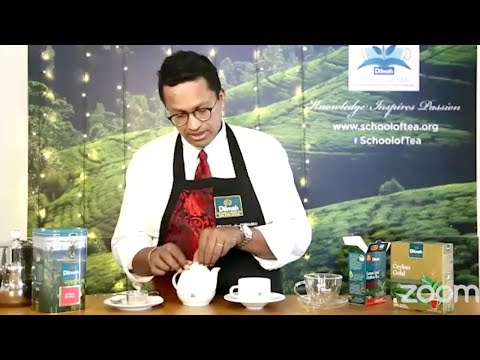
Discover how to brew the perfect cup of tea with Dilmah CEO, Dilhan C. Fernando – and then, “break the rules of brewing” with Spanish Mixologist, Alberto Pizzaro! Learn how to make two incredibly delicious festive tea inspired mixology recipes, from a creamy and delicious Chai-nog made with Dilmah Spice Chai, to a vegan-friendly Dilmah Italian Almond Iced Tea.
Transcript
This transcript was created automatically from the audio and checked for names. Minor errors may remain.
Good morning, good afternoon, and good evening, everyone, and welcome to the final session of tea inspiration, virtual tea inspiration, 20 minutes, and today we're going to be talking about tea, brewing the perfect cup of tea, but we're also going to be talking about how to break those rules for brewing. Now, some of you are watching from the northern hemisphere, and I know it's called there's a snowstorm coming through the northern parts of the US, and I understand it's kind of cold in Europe, well, some of you are reaching us from Australia, New Zealand, and it's warm. Take solace in this, British Prime Minister, William Gladstone, he talked about how when you are cold, tea will warm you, and equally when you're warm, tea will cool you, but also when you're excited, it will calm you, and when you're sad, it will cheer you.
So, it's always tea time, and we're going to look at a few basic rules. What is brewing? Brewing is about extracting all of the goodness that we put into the tea. Actually, it's not us. We call ourselves tea tasters and tea makers, but it's a combination of heaven and earth. It's only then that the tea maker gets involved. Why? We studied a few weeks ago the influence of terroir on tea, and it's that, the sunshine and the rainfall and all that good stuff comes from the natural climate, the pristine environment in which we grow tea. It's that that gives tea its taste, because it forms the enzymes, fills the juices in the tea leaf with just the right elements, the flavonoids, the group of antioxidants that give us the goodness, the texture, the taste, and the appearance.
So, what do we have to do to make a perfect cup of tea? Well, there's a few simple rules, and we're going to go through some of them in a moment. Most importantly, you need good water. Now, water, everybody says, is just water, right? Actually it's not. So, good water is water that doesn't have too many minerals in it. And the minerals that you have typically in water are calcium. Calcium is really bad for tea. So, you can have a beautiful bright tea and a water that is rich in calcium, such as, for example, in London, it's no fault of the Londoners, but it is the geology of the area in which the water is harvested or where the aquifers are, and it is that which gives the water a particular mineral, an excess of a particular mineral.
So, in all, there should be less than 100 parts per million of minerals. So, if you want to be a perfectionist, and I encourage you to do that, find a good water. And on the side, you will see the different measures of what is inside the water. So, make sure that there's less than 100 parts per million of the dissolved solids. That means all of the stuff that's useful, good for you at times, but not in excess, certainly not for tea. So now, we have good water. So, we have water, pH 6. We have a total dissolved solids of less than 100. And so, that makes it good water.
What we're going to do in 2021, loose leaf tea is going to be big, we hope. And so, we're going to start with loose leaf tea. I have my teapot, and this teapot, our melton teapot, is a 220 millilitre in capacity. So, let's assume 200 mils. I'm going to put in a heat teaspoon full, because I've got this beautiful Ceylon pecco. It's a golden pecco. I'm actually going to put in a little bit more, because I couldn't get a heat teaspoon full into that. So, that would be approximately two and a half grams. And you know what I'm going to do? I'm going to show you another important thing about tea.
The goodness that's the taste and the flavour in tea comes from the antioxidants, the flavonoids and so on within the tea. And it's important that you protect them from degradation. Tea is hygroscopic, it absorbs moisture, and it can get degraded because of bacteria and development of lipoxins and so on as a result of bacteria. So, make sure that you keep your tea in something like this, so that you protect it from any odours or any moisture in the environment. So, then I've got my good water, I'm pouring in the equivalent of 200 mils. And to start the brewing, you know what happens? Gravity, you need to make sure that you stir, because else the teas will settle at the bottom.
And importantly, you need to make sure that you cover the tea. So, I'm going to keep that on loosely. But then I'm going to show you a little bit about how to brew a perfect cup of tea with a tea bag. I guess that's what most of us use. So, we've got our foil wrapped. And why we wrap these in foil is that we want to make sure that the tea is protected from odours, from moisture, and so on. So, I've got our foil wrapped pouch, I take my tea bag, I remove the tag gently, and I pour the water directly on the tea bag. Now, what's important here again is that where I've got a tag, I can move it around, I can agitate the bag, but I've got to do this while also where the leaf tea is concerned, while stirring, because the water needs to be in contact with the tea.
And that's how brewing happens. So, if I don't move the tea bag around, it's going to have a cloud of tea around it. And that's not very good, because we're not extracting the goodness. So, if you like your tea light, don't change the time. You need to brew a black tea, you need to brew for at least three minutes, and you've got to agitate every salt and at least every minute. And that means that the water comes into contact with the tea, it extracts the antioxidants, the flavour, the freshness, and you can see it happening before you, because as the goodness is extracted from the tea, you have the colour changing, and you're seeing this beautiful, bright colour coming out, the brightness of the black tea.
I come back to my tea pot here, make sure I stir it again. And now we're compressing time, because I don't want you to miss my good friend Alberto, who's waiting on the other side, all the way across in Spain, who's going to talk to us a little bit about tea mixology. So now, what's important is with black tea, you need to have a minimum, three minutes. If you take your tea with milk, you need to give it five minutes. And that means you're going to get balance, because whatever you add to tea, you're going to be taking away some form of the character of the taste.
And the principle of good taste is balance. So, when you're having tea with milk, you need to make sure that it's tea with milk, and not milk with tea. And so, you need to have a stronger tea that can handle the milk, so that when you add that dash of warm milk, and that's what we recommend, then you're going to have a nice balance. So, three minutes, hence, I don't take my tea with milk. I do take it with a little bit of honey sometimes. Fantastic with a little bit of mint leaf, put some mint leaf in your palm, lightly a bit, and then put it into the cup or pot.
Spices, tea is amazing with cinnamon, with clove, with cardamom, and all that other good stuff, which also adds to its goodness. So, once I'm done with the tea bag, let's assume it's three minutes. Don't squeeze the bag. You can leave all the caffeine in there. Or, with a teapot, what you do is simply take your strainer. You know what one of these is, and you pour out the tea there. You have a beautiful cup of Ceylon's finest. Return the tea to your holder. Make sure your tea is stored well. And now, green tea, two minutes. If it's a white tea, it's also good for around two minutes.
But ultimately, it's about taste. When you push a black tea beyond five minutes of brewing, you can get some bitterness. Some people like the intensity and the bitterness, but some don't. So, infusions, that's completely different. That's not from camellia sinensis. That's not tea, but they can require four minutes. That's infusions like chamomile, peppermint, and so on. So, that's how to make a perfect cup. Now, before I introduce Alberto, I have a couple of other things that I would like to show you. It's Christmas time, at least next week it is. And we want to remind you a few things that go well with Christmas lunch or dinner.
Because remember, if you were at the session where we talked about tea and health, tea does a couple of things very well. Of course, it warms you, it cools you, it calms you, and it cheers you. But what it also does is it aids digestion. So, when you've eaten fatty sweet foods, tea will help balance the palate, balance the sweets. It'll help the body digest and helps the body synthesize the sweetness, the sugars. And this is how tea helps protect the body from diabetes. But it also helps cleanse the palate. So, if you've had your turkey or you've had some rich food, and we all have rich food around Christmas and New Year, you need a cup of tea to wash it down.
And it does exactly that in your stomach because tea emulsifies. And in this way, it protects the body from cholesterol and it aids digestion. So, we have a question for you. How do you like your cup of tea? The poll is on the screen. Click and tell us, do you like it light, do you like it medium, or do you like it strong? We would love to know. So, most people like it medium.
I'm going to ask you a minute whether you like it with milk. But before that, thank you. So, it's mainly medium. Thank you, 15% light. Okay. So, if you're having your tea light for that 15%, what you need to do is brew the tea in the normal way. Don't reduce the time. Brew it in the normal way. So, you extract the freshness, the flavor, the antioxidants, and then top it up with water. So, this cup is full, but use a larger cup. Top it up with water because what that's going to do, it's going to give you your light cup, but it's also going to make sure that you extracted the antioxidants, the flavors, the aromas, and all the good stuff that makes tea such a prized and beautiful beverage.
So, now we're going to talk a little bit about Christmas. So, you know, tea and desserts, it's truly a match made in heaven. So, if you're having something rich, chocolatey, we've got a few suggestions with your Ulog Dilmah Moroccan Mint Green Tea because Moroccan Mint Tea is spectacular with anything that is chocolatey. We've got a suggestion with Christmas cake and, you know, with the marzipan and so on. We've got our Dilmah Rosa and Marzipan. Our Christmas tea, it's beautiful because it's got a beautiful, beautiful marzipan note there and that's a complimentary pairing. And with shepherd's pie, our brilliant breakfast and so on. Earl Grey is amazing, particularly with spicy dishes.
In Asia, we do have spicy dishes for Christmas, but also with cupcakes and so on, it balances the sweetness. You know, sometimes you take a dessert and it's so sweet. It's kind of cloyingly sweet. We'll take a cup of tea afterwards and you'll find that the sweetness is completely balanced. But also the fat's cleansed on your palate and you get up from the table feeling much better because you have a cleansed palate and you know that it's doing good in your system as well. So we come to another suggestion, which is Christmas tea gastronomy and this is where we put the tea into the Christmas dish.
So check out the roast duck with blueberry and pomegranate tea sauce. You can have a look at it on the Dilmah tea, the recipe website. So there's details of that on screen right now. But with that, I'm going to move on to another question. Getting ready with the question. So the question is, how do you like your tea? Do you generally add milk or sugar? Do you add both? Only milk, only sugar, or do you add neither? I love those responses that say neither. Brilliant, but okay. Some say I add both. The tea that you like is going to be the way you like it. That's the best way.
So it's not the way I like it because that's not going to be much good for you. But do try a good tea. When you make a good tea, brew it perfectly. Try plain. For example, this is a very different tea to what I brewed here. Now this Ceylon Gold, it's a beautiful dimmular tea. I should close it so I don't have any moisture and so on going in there. This is the perfect storage. But this is a bright, woody, slightly oaky character. It's a beautiful tea. This tea is a large leaf because the leaf size is large, a smaller surface area, less extraction, golden, spectacular.
So I've told you the rules or at least a few of them. Now I'm going to introduce you to a gentleman who's going to show you how to break the rules. Alberto Bizarro is an amazing mixologist, a man of incredible knowledge, yet great humility, and a spectacular bartender. Ladies and gentlemen, may I introduce my good friend Alberto, who joins us all the way, I think, from Barcelona. Ciao, Alberto, hola. Hello, hola to everyone, everybody.
I'm now in Barcelona. And what I want to do today is sharing with you some recipes for this Christmas period. I'm going to make one mocktail and also one cocktail. So let's going to start with the cocktail. The cocktail is going to be a twist on a classic cocktail, popular cocktail, called the eggnog. The eggnog is a cocktail which contains a spirit, usually brandy or rum. I'm going to use a spice rum. And a spice rum is a rum, usually flavored with vanilla and some spices like cinnamon.
Also the eggnog contains egg yolk and cream. In this case, I'm not going to use either cream or egg yolk. We are going to substitute both ingredients. And we're going to try to make, I'm going to make, actually, a vegan version of this cocktail and dirty free version of this cocktail. So for this cocktail, I'm going to use the Dilema Spice Chai, which is tea, which contains also spices, ginger, cinnamon, and cardamom. And I heated, I brew it using rice drink, like rice milk, instead of water, instead of water. I'm going to break the rules. I'm going to use this rice drink. So we heated, I heated before the presentation, so now it's still warm.
And we are going to add, I'm going to add the rest of the ingredients. It's 200 milliliters of this chai tea, brought in rice drink, which is going to be the cream part of the recipe. So the jerk part, the egg part of the recipe, is going to be pineapple puree, which I made by blending a pineapple in blender. So we will get the texture of the drink, the actual texture of the egg yolk, with this pineapple puree. I'm going to add 40 milliliters, around 40 milliliters of the pineapple puree. We'll have the recipe anyway in a while. The sweet part of the recipe is going to be maple syrup.
You can use maple syrup, agave syrup, or just caramel syrup if you want. If you don't like any of these ingredients, you can use just sugar syrup. But we need, definitely we need to add a sweet part and the rum, the spice rum, which is going to be any spirit part of this cocktail. I'm going to add 50 milliliters, the D.I.S., you hear it all together.
It's a drink that is simply served also cold, but in this case, for this Christmas patient, I prefer to drink it a little bit warm. So we don't serve it in this jar, in this mug. But you can also go a little bit more creative and serve it like in any kind of mug, or you can even go, like, tiki and serve it in this Polynesian-inspired glass. And now the best part of the drink. You can just serve it in the glass, one spot. But as a piece of chai, we're going to do the chai rituel. If it's risky, maybe your first time don't be afraid.
And we're going to throw the liquid from one vessel to the other vessel.
One jar to the other jar. You can use any metal jar.
The idea is to add a little bit of texture. We're aerating, leaving some air to mix. Okay, like a few times.
And then you serve it. I'm going to use this foam.
And the best part, we need to top this drink with spices. I'm going to grate a little bit of cinnamon.
You can use cinnamon powder if you don't have a cinnamon stick, but I really recommend you use grated cinnamon. And some nutmeg or any kind of nut that you have at home at this time. So definitely Christmas about spices. And here you have the price of the drinks is fake eggnog. It's called the elf's season chai. Here you have the recipe of the season of elves, which is a twist on an eggnog and also chai.
Quickly, we are going to get second recipe.
Sorry, we had a little bit of a network issue there. I hope it didn't cause a problem, but we do have another question for you. Have you ever made iced tea using tea bags or loose leaf tea? Yes, no, or I would like to try. The poll is on your screen right now. While Alberto gets himself ready, please tell us. Oh, mostly yes. And some would like to try. That's brilliant. Wonderful. There's two ways. We tried the elixir at the last session, but now you can do it. Just make the tea the normal way, but brew it double-strength or put double the tea and then over ice and top it up with water.
It's kind of simple. So back to Alberto. Okay, it did happen. So we are going now to the second drink. Now it's time for a mocktail. A non-agopoli drink that we can share with the whole family. And for this occasion, I'm going to do like a punch. Punch is a drink to share. In this case, I'm going to do, I'm going to make the drink for two people, but you can make for maybe four or six, depending on how many gifts you have at home at this time. For this recipe, I'm going to use the Italian almond tea, which is a strong tea with a nutty flavor with a nutty finish.
So being a strong tea, I'm going to brew it just for like three minutes, but as I'm mixing it with other ingredients, like juices, I'm going to make it a little bit stronger. Instead of two and a half grams, I'm going to use three and a half grams. And I'm going to make this drink for two people.
I'm going to keep the glass of gravy here and I'm going to add 300 milliliters of this tea.
It's also a drink that is going to be served warm. I'm 15, I'm 15.
That's going to be the main part of the concert. So now we're going to add a few juices. First juice is going to be orange juice. I'm going to add 150 ml for two servings of the same amount of peach juice.
We will add also lemon juice. We need to balance the sweetness with some lemon juice.
It's going to be 30 milliliters of lemon juice.
And also we need some sweetness.
We'll heat all together and we'll start repairing our jar. I'm going to fill it with fruit, a lot of fruits. It's going to be like a, coming from Spain, like a sangria style drink, which where the fruit eats ringling flavor. The rest of the ingredients, because since it's going to be like infusion, the rest of the ingredients. We usually make it with wine. The wine sangria is the most popular one. You can make sangria with any wine, like a sparkling wine as well.
This case we're going to make with juices and tea. Put the fruits now carefully because this is hot. We protect the jar with the metal spoon.
We pour it inside. We need to keep a little bit of space for the last of the ingredients.
The last ingredient is going to be a non-spark and non-alcoholic cider. You can use also a sparkling apple juice, but definitely you need a little bit of business to finish this ring.
All together, we are ready to serve.
Don't forget to garnish your drinks.
Use some fresh fruits.
Thanks, thank you, some flowers.
And here you are.
Be a mocton to share, suitable for children as well, for the whole family. Enjoy it.
That was amazing. Thank you. And I'm going to go home and try that this evening. Thank you very much, Alberto. I hope it's nice weather in Barcelona. You stay safe. And from all of us, of course, Feliz Navidad, but don't go yet because we've got a couple of announcements and let's see what we've got coming up. This is the last session for this year, as I mentioned, but we've got lots coming up in the new year. So, tea trends for 2021 and that's going to be on the 12th of January. We're going to be talking about what's new in tea, what's coming up, how new types of presentation.
I mean, you saw some amazing stuff with Alberto already. We're going to talk in February about honoring the tradition of wellness, harmony and comfort. Why? Because we all need a little bit of detoxing in Jan, Feb, March. We always do. We always need a bit of good health, but health and wellness is in vogue. So, we'll be talking a lot about all of that. So, with that, ladies and gentlemen, I'm going to show you the slide where you can see where you can join us, the Dilmah Tea Club. So, that'll be where we are online. Our future sessions will be advertised there. The past sessions will be posted there.
I want to thank my good friend Alberto Pizarro once again. Big cheers to you, Alberto. Feliz Navidad. Have an amazing new year. It can't be worse than this one, but we are hopeful. We are going to come out stronger, as are we all. So, have a great one. Stay teens-five. Thank you for watching.
More episodes
All episodes
The Story Behind Your Cup of Tea – Episode 2: Good Health & Immunity – Tea inspired Lifestyle
Watch Transcript