The ingredients and aftermath of success. Sri Lankan Cricket legend Kumar Sangakkara chats Over a Cuppa with Dilhan C. Fernando. 35 mins
With Kumar Sangakkara
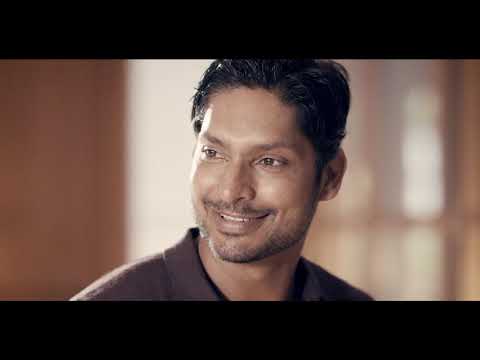
About this episode
Tea grower and Dilmah CEO, Dilhan C. Fernando, in conversation with former Captain of Sri Lanka’s National Cricket Team, and President of the MCC, Kumar Sangakkara on success, humility and more.
Transcript
This transcript was created automatically from the audio and checked for names. Minor errors may remain.
Over a cuppa with Dilhan Fernando, what success, inspiration, perspective and working hard really means. Tea inspired chat with cricket icon Kumar Sangakkara. Kumar Sangakkara, you are known as a legend, you are an icon and you've been called many other things. The purpose of this podcast is to share inspiration from people who have gone beyond the limits of convention in their fields. In your case, it's very clear that success was not inherited. It took a lot of effort and you have breached conventional limits in a very real sense. Tell us, please, what you believe to be the ingredients of that success. Well, I think it differs from person to person.
Everyone's an individual and your formative years, what drives you when you're a child, the environments that you grow up in, the values that were inculcated in you. All of that goes a long way along with the talents that you have and the capabilities you have in terms of the profession that you choose. Now, I chose cricket and that was done much later in life in terms of modern day career building. So a lot of kids nowadays start very young. They choose a particular stream of study or sport and they pursue it. When I was young in terms of sport, I was playing quite a few different sports, about five different sports in school.
And I only switched to, I mean, solely concentrated on cricket when I was about 16. So that gave me kind of a healthy understanding of what other sports were like. My parents insisted that I have to be very focused on my academic work as well. So it gave me kind of this, I wouldn't say perfect balance, but kind of a balanced perspective as to, you know, what was expected of me in terms of being a child at home, but also in terms of what was important to me in terms of my own decision making capabilities. So I kind of was able to see both sides of the coin that life was not just weighted in one way, that there was, you know, more than just one aspect in terms of what you can do, what you can choose, what interests you, so on and so forth.
I would say for cricket, I wasn't the most talented of people. But when I came to Colombo to go to university and then I got into the national cricket side, what I realized was just talent, potential, all of that is great. You know, there are always words that are used abundantly to describe people in, you know, in any field, especially in sport. But unfortunately, talent and potential without being quantified in terms of a tangible output of performance at a level that you expect of yourself and a level that is benchmarked basically against so many people around the world is, I mean, it's sometimes, I mean, I wouldn't say it's useless, but I mean, you need to have that performance, that output, that potential and talent refining the ability that really takes you to the next step.
And that is just kind of in terms of what you do in terms of my cricket, in terms of my batting, my technique, so on and so forth. But as I improved in my cricket playing ability, the first three, four years, I was, you know, I was good, I was improving at a certain level. But what I realized now was that what the real reason for my really rapid development and improvement was the fact that I, it took me a little bit longer than some others, maybe, and everyone takes their own time, is that I realized a lot more about myself, my own makeup, what made me tick, what motivated me, my emotional intelligence quotient, and how all of this kind of showed me who I was as a person who played cricket.
Not that it showed me who I was as a cricketer, because your personality, your character, your traits, coupled with your ability in terms of talent and your playing ability, that combination is what really needs to blend together and have a great synergy to take you to the next level. Just being able to play and play well will take you only so far. And that was kind of an eye opener for me to understand that the person you are and the person and the development of that person, and the improvement of that person, not just on the field, but off the field, plays a huge part in taking me further and further upwards in my cricketing career.
So it took me a long time for me to realize, okay, how do I react under pressure? How do I connect with other people? What kind of a support structure do I need around me? What was a healthy lifestyle? What other interests do I need to cultivate outside cricket so my mind is free and at ease? What was really important to me in terms of the benefits I received from cricket and what do I do with them? How do I impact others? Do I have a social responsibility? Other duties towards family and friends, you know, various kinds of questions. And that kind of helps me to understand, okay, if I'm failing, how do I cope with it?
If I'm succeeding, how do I then cope with it? How do I plan? And how do I change? Because that is such an important thing in anything we do, right? We can't stay static. The world around us is changing. Your competitors, your opposition. You know, Charlie Chaplin had this great port, isn't it? I mean, it's a tribute to Charlie Chaplin. I don't know whether it is, you know, to succeed. You need family and friends. But to really succeed, you need enemies and competitors. So in cricket, you have your opposition. You have the teams that you play against, other cricketers that you benchmark against. And they're constantly changing, constantly improving. So you have to do the same.
And change is inevitable. This is something that my father always told me that if you don't change, you will be obsolete. And you have to constantly take that risk and be open to the risk of change, but plan it out and always change for the better. And that's the same in cricket, in terms of your playing, in terms of your personality, off the field, on the field, everything changes. And it helped me really plan out as to, along with my development as a person, it really had a knock-on effect, hugely to my development as a cricketer. And it helped me to plan from little things like practice. How do I practice for this opposition, for these conditions that I'm going to face?
And then from there onwards to understand, okay, I'm going and facing different opponents. And now what do I need to have to face there? And if I meet the same opponent six months to a year down the line, they've changed. So I need to keep up. So I changed things that were kind of completely, kind of the fundamentals of my game. I would change the grip. I would change my stance. I would change, you know, kind of the building blocks of my game, because in my mind, that was essential to keep me ahead of the game, ahead of my opposition, to help me improve, to challenge me, get me out of my comfort zone. So these are lessons that I kind of learned from myself and I learned from my friends, family, you know, and it was a kind of looking back now. I understand that you're not just capable of one thing, or you're not just born to do one thing. You're born to do many things and you choose what you really focus on. But that focus
can't be just a singular focus. It has to have a knock-on effect that is beneficial to you, not just in your profession, but outside it. And as a result, a knock-on beneficial effort to all those around you, not just your family and friends, but also the larger society, people that you connect with, because you can't really live in isolation. And it's the same in cricket. Cricket is an individual team sport. Your individual performance matters, but so does the performance of everyone else. And your individual performance has a beneficial or negative effect on others in your team. So it's not just always about you. So those were kinds of the lessons that I learned that really helped me to kind of push the envelope constantly. And I'm a great believer that you can't eat, drink, and sleep cricket, or your profession, or just one thing in life. You need to be really open to personal development, open your mind, broaden your horizons, and look beyond your focus, because that helps you
to maintain that focus intensely when you're engaged in what you do, and then relax and grow in so many other ways when you're not involved in that particular central focus in terms of your profession. So those are kinds of the things that I kind of learned. An incredible philosophy, Kumar, and actually a perfect prelude to my next question to you. We are all going through so much. What you're going through right now is symptomatic of what we are experiencing. But there are two ways to confront a crisis, as we all know. One is to be overcome, and the other is to overcome. And as we want to share a message with young entrepreneurs, young sportsmen, and women, tell me what is your advice to youth, because you have clearly been through a tremendous amount in achieving what you have achieved. As they look to building their lives and their futures in this crazy chaotic and volatile time, what is your advice, Kumar?
Well, I think one of the most important things is to be able to read situations, and understand situations, and understand life, and understand the world that you're in. We're all nostalgic at night. My wife and I always talk about our kids, who are different to how we were as children. And sometimes what we had when we were kids was very wholesome and very different. And what children have now is slightly different, but it is still wholesome, and the environment that is created by everyone working together. And I believe that if I just fight against what is here now, and try to imprint upon my children, what I had when I was a kid is a little bit unfair, because the world has changed. The challenges are different. The chaos, as you said, is very different to what we had as children. And the world of course is constantly changing, and chaos is part of life. But what our children have today in terms of how they learn, how they form relationships, how they look at life,
and how they broaden their horizons, social media, access to information, everything has changed so rapidly. That it takes a blending of what we had, but also of understanding what the present is, to plan really for what is to come. Because who knows, 10 years, 20 years down the line, what the world may hold. And I believe that fighting against it is not how you do it, because sometimes you can knock your head against a brick wall, or they say the definition of insanity is doing the same thing over and over again, and expecting a different result. I think it has to be a system where you learn how to navigate. One of the things with education in the world today, I believe, is that unfortunately we base our education, large parts still, on literacy and mathematics, rather than on values. And I think there needs to be a shift there, where our education and our outlook on life has to be value-based.
And if that foundation and the core values are there, you have a head start in terms of coping and understanding and navigating this very, very strange and changing and scary world at times. And everyone's ability to cope, as you say, depends, of course, on their coping mechanisms that they've learned, and everyone has different levels and abilities to cope with situations. And there are times when you can be overcome, and it is not a negative or a weakness to understand that there are certain things that are difficult to overcome, that you're at a standstill. And that is when you have to understand that sometimes when you are faced with an obstacle, you can't just go through it. Sometimes you have to go around it. Sometimes you have to have a great support structure, an ability or a network that you can feed off, that you can ask questions from, ask help from, ask assistance from. And these are all these connections, these personal connections that you build along the way. Yes, you will read books, you will gain knowledge, you will gain
experience, and you will understand more and more as you grow older. But along with that development, in terms of being an individual by your own, on your own, you also need others. We don't live in isolation as human beings, we're all connected to one another. And that is such a great thing, because when you talk about situations and experiences, traumatic or beneficial or otherwise, there's always, there are always people who have faced those situations before, you are not alone in it. And there are so many people out there, including people who are very close to you, who can come to, you know, who can assist you, who can help you. And it is a necessity in life that you take advantage of. It could be your faith, it could be your family, it could be your friends, it could be, you know, it could be anyone. But it is important to have those healthy connections, that those support structures, that ability to access assistance when you're required, because, you know, in life, in, you know, every step of the way,
or in many situations, you do need that assistance. At the same time, you have to be self-sufficient as well. And you have to understand, like I said before, what's important to you. And that with so much out there in the world, that it is not necessary that you partake of everything. And you can choose which or what you allow yourself to experience, you allow to be an impact on your life and personality. And that really helps you focus on areas that are actually positive and beneficial, not just to you, but to everyone else as well. In terms of overcoming, your character traits are very, very important. And sometimes, if you get too overwhelmed in the moment without understanding that it is only a temporary phase, a stepping stone to something else, that what you're experiencing now, if it's a negative, if it's, let's say quarantine, I have, I'm undergoing two weeks of quarantine. But this is just a stepping stone to what is after this. And what is after this? My time with family, my time in terms of living my life back
home. It's a strange new world, yes. But it is still an exciting time. Everything is not going our way. There is the coronavirus you think of, the economic impacts of that, the impact on our social lives, the impact on our human connections, the impact on our education for my kids, they are learning online. But what does that do? It helps us really find things that we probably lost focus of, but are suddenly become very important to us now. Things like eating together as a family, cooking together as a family, sitting down and having a conversation as a family, the ability to call someone, your parents or your friends and have actually a meaningful chat rather than a passing, hello, how are you? I'm just calling you because I'm in a rush kind of a life has slowed down in a certain way. And it's kind of given us a new perspective that this is precious. Time and moments are precious. And even in the face of something that is really shaking
up the world, everyone around the world, yes, people are suffering. Yes. So what can you do to help? You can help alleviate suffering, not of the whole world, but pick a family that needs help in your area. There's something that you can do that pays your good fortune forward. So in every situation, I believe that if you really take stock, breathe and have a look at how it affects your life, you can always find answers to it in what you are and who you are as a person. If you're a person of faith, it's times like this really kind of strengthen that foundation, isn't it? I mean, you can always question faith in times like this, why is this happening? But if you're a person of faith, I think these are times when you take stock, when you reflect, and when you understand how faith provides you with a great bedrock of a foundation to get through situations like this, you take stock of family, you take stock of friends,
you take stock of all the blessings that you have in life and you feel grateful and quarantine sometimes or a lockdown is maybe one way of where you stop to think and take stock. And I think in life, when we get through this tough period, I think it's very important that we from time to time stop and we take stock. And that really allows that stillness, I think really away from the chaos, away from the hustle and bustle, away from your racing thoughts, the ability to just be still, quiet, calm, focus and think and rethink. Those are great ways of dealing with challenges, overcoming challenges, planning, you know, ways through around over challenges. And of course, anticipating challenges that are to come. So there are various ways I think you can do it. Choose the one that's best for you. That's very powerful advice and really a beautiful perspective. And I mean, no doubt, that is, that is the way to overcome, you know, and you know, my father very well, you know, his philosophy and one of the things that
he and you have in common is a belief in humility as being an important component of success. And now I think the ingredients of success and building to that are important, but equally important is how you handle success. Now, tell us please, how you believe successful sports women, sportsmen, business people should handle their success. Any advice? Well, I think again, it's such a, it's such a individual thing, isn't it? In my perspective, I think that for me, my success in cricket was, yes, I was extremely fortunate. I worked hard and all of that. But for me, that was a phase, one phase of my life. And that doesn't really define success for me. It defines my success as a cricketer period. It also may reflect upon the fact that I kind of, my personality was beneficial in terms of how I grew as a person to my cricket.
But now when I retired at 35, it's a completely different world and a new learning for me. So I cannot be a cricketer for the rest of my life. I have to now start being who I am in terms of what I want to do after cricket, what defines me after cricket. Because I think it's quite, for people who don't know me in terms of personally don't know the inner workings of me, I might always be a cricketer. You know, he's the guy who played cricket. But the impact of your life is not because you scored 10,000 runs. The impact of your life is how you used it in terms of what I received from cricket, whether it was financial, whether it was knowledge base, whatever. How does it then transfer to my life after cricket? What do I do with my platform, with my finance? And what do I find as a second career? How do I impact others? Are there things that are important to me beyond just myself and my family? And those are questions
that you ask yourself. And when you talk about humility, I always think humility comes from confidence. Confidence in the fact that you have achieved and confident and the fact that you're confident in yourself and your abilities. When you have that, and I see that in your father, Dilhan, a lot, because he is content and he has achieved such greatness in his field. But that greatness to him is a means to an end of helping, of leaving a legacy not just in business, but in terms of leaving a legacy as to how you impact others with your CSR work. It's not just a corporate policy. It's a personal philosophy, I think, for your father in terms of how he lives his life. And that is what real humility is. It is not about buying your head and being soft spoken and, you know, waiting at the back of the line, even though you should be at the front. That is not what humility. Humility is the ability to look beyond your own need at the needs of others
and look beyond your own self at others in terms of how your life can touch and benefit someone else's. And that is what humility is. That is what comfort, that is what achievement and success looks like, really. It's about impact. And I think that is what everyone really chases right now. Imagine 30, 40 years down the line, if I'm still there and I have all my old friends around. What are we going to talk about, about the glory days when we were happy, when we played cricket now? It can't be that you're only happy for a period of 15 years in your life, right? And that 15 years defines you for the rest of your life. No, you should be able to talk about your life in stages, in facets, but overall, tied together to where you are now and looking back. Everyone has regrets, yes, but you can't look back only at certain parts of your life. It has to be every face of your life, how you enjoyed it and why, and how you, as a person,
has left a legacy where people's lives have been touched for the better, change for the better. But it could be one, it could be 10, it could be whatever, it doesn't matter. But that is actually, I believe, what your purpose is in the end. And all these things we achieve along the way are just stepping stones towards achieving that purpose. I mean, you realize that I think humility automatically comes. It's not something you have to cultivate, but if you're confident and you are successful and you're confident in yourself and you base yourself on those wholesome values, I think humility will always be a part of your life. You have an incredible philosophy, Kumar, and to a significant extent, you have answered my next question, but I'm going to ask you anyway, just for purposes of clarity for those who are listening.
It's our belief as Christians, of course, that success is a blessing, and like any blessing, that it must be shared. But beyond that also is the fact that what motivates my father to a large extent is the fact that his fulfillment and the difference between success and significance is defined very much by that sharing of that blessing of success. Now you are, of course, you have that blessing in abundance, not only as a cricketer, but beyond. Any advice for successful young entrepreneurs? There are so many around today, and I think a key point in my father's life, which he often shares with us, is his decision on does he share or does he become a very, very rich man with more money than he could cope? And I know you have a principle on this, and I would love to hear it. I think everyone realizes at various stages of their lives that time is finite. Life is finite right here on earth, and you have a limited time
to do what you want to do. And at various times, things become, you know, important to you in different ways, right? I think along the journey to success and that final feeling of, okay, I have arrived, you focus on various things. You intensely focus on work, you intensely focus on process, you intensely focus on wealth creation, so on and so forth. And along the way, you also focus on who you are, because like I said before, your career, your profession, your life is tied very much down to your personality and who you are. And hopefully that personality is a healthy wholesome one. No one is perfect, of course. But when you realize time is finite, I just hope that people don't realize it at the back end of their lives, when they're really facing, you know, down the barrel, and they're getting closer to the end than the start.
I think if you start from a point of view that you will die, you don't know when, then it kind of changes your perspective on life. I don't think life should change your perspective on death. I think it should be the opposite. And everyone wants to have a time, maybe when that moment's imminent, to be able to look back, have regrets, of course, but also kind of breathe a sigh of maybe relief that you have perhaps done or achieved your purpose in life.
And when you change your perspective from life to understanding that time is finite, I think it hastens the change in you to look at others beneficially. Because you look around and you want to have people that are close to you, that have very close connections to your life with you in most moments of your life. You want to look around and hope that you will be remembered for those kind of intimate personal moments that you have shared with people. And if you understand that early enough, I think it changes your perspective so much more in terms of giving back. And this concept of giving back also in the modern world has changed.
I see so many people giving back and it is advertised in terms of how you have given, what you have given to who and whom. And at times, using media and platforms to give and to kind of disseminate that into the public eye is important because hopefully that will inspire others to follow suit. And today with the mediums that we have, we have the opportunity to connect and encourage others to go along with you and give through various campaigns.
But it is also important that it is not just in the public eye that it becomes a way of life in terms of how you connect. Now we all come with grand ideas of wanting to change the world. And sometimes for us, it is impossible in our lifetime or it could might be impossible in many lifetimes. But what we can do is change lives. It could be one life that you change, one life that you touch positively. And who knows that paid for effect in the future, that life you changed and those connections you made may in fact change the world. And that is the hope you have. And that is why you connect and you help and you bond with other people is to pass on your goodness. What you have learned and what you have achieved and what you have earned and give it a different twist.
Money to help someone else is not about money. It's about a change in circumstance. It's about a change in life. It's about a change in mindset, change in ideas. And that is real change. Not that you just give something out and you withdraw with what you give in terms of tangible resources. If you spend your time and you spend your time connecting with other people while you help and with the people that you are assisting or you're connecting with, the exchange of ideas is what makes a real change. The exchange of perspective is what makes a real change. And sometimes you might assist someone with the idea of changing them, but sometimes the change on you is what's most profound, especially if that sparks a kind of a liking to make that giving a part of your everyday life. And I think that for me, there's Omar Khayyam in his rubaya today is a stanza that says, of the myriads before us who have passed the door of darkness
through, not one returns to tell us of the road which you discover we must travel to. So everyone has different ideas of death and the journey to that door that you pass through, right? You think you know what's beyond, you think. And everyone, faith, religion, everyone gives you ideas and perspectives. But the real point is, what do you do until then? What do you do until what is your life until you reach that moment? And you think about the significance your life can have, the legacy that you can leave behind. And that time is finite. And you have to be able to manage that in this in these years that we have, I think that will change perspectives and minds. Don't get too entrenched in who you are. Don't get too entrenched in the fact of what you're building. Because whatever you build, whatever you do, connections, legacy is about people touching other people's life and benefiting other people's lives. It's rarely about finances.
Kumar Sangakkara, your philosophy, your words, perfect guide for the times. And thank you for talking cricket, life and purpose. Incredible philosophy. And now I have a clear reading on how you have become what you have and what you have achieved, what you have. Thank you so much. That was incredible. Thank you. Thank you.