Dilmah CEO, Dilhan C. Fernando, over a cuppa with Black Hat Chef – Bernd Uber
With Bernd Uber

About this episode
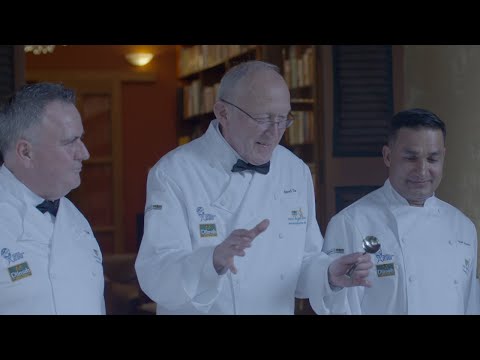
Join Tea Grower and Dilmah CEO, Dilhan C. Fernando, over a cuppa with Black Hat Chef – Bernd Uber as they discuss what it means to be a Cook and Chef in the 21st Century. He dishes out what it means to cook with respect for food, while keeping up with food trends. Chef Bernd Uber also reveals the attributes that make an ordinary cook, a great chef – listen in to find out!
Transcript
This transcript was created automatically from the audio and checked for names. Minor errors may remain.
Bernd Uber, welcome to the first in the series of Over a Cuppa. Bernd, we are all friends and it's such a privilege to catch up. May I ask you first, what's in your cup of tea? Oh, well, I mean, what a crazy question really to ask. It's, in my opinion, the best tea grown in the world. And of course, it has to be Dilmah. There's nothing else in this house or even with my neighbors, there's nothing better than Dilmah. So it's a beautiful cup of perfectly brewed, round butter, one of my favorites. You are always excellent with the brews, Bernd. So I'm going to start by asking something that you're definitely going to need, all the antioxidants and the theanins in that cup of tea for. What makes a chef a great chef? Is it passion? Is it commitment? Is it skill, personality, or is it all of the above or more?
Well, it's all of the above and more. I think you could write pages, what makes a good chef? And a good chef in my younger days, 60 years ago, was somebody completely different. In those days, a good chef had to be able to cook and he might have to do some food orders and make some menus. But now it is so more involved being a good chef. And I think the first thing you possibly need to look at is hopefully some calling. I mean, if you want to be in the religious field, you have a calling. And I believe when you're in cooking too, the calling usually comes pretty early, that you make up your mind now, I want to be a cook or a chef in due course. But all the components you mentioned are extremely valuable and are a must. And it's getting more difficult now to be a good chef than it was 30, 40, 50 years ago.
Bernd, you used to always tell me that there's a difference between a cook and a chef. We spent, what is it, almost seven years intermittently on the road in the Real High Tea Challenge. So I know what the difference is, but perhaps you might enlighten with your version. Well, yes, it's heavily discussed and argued about the difference between a cook and a chef. I still consider myself a cook and always been a cook, proud to be a cook. And I've worked as a chef. But nowadays, of course, everybody puts on a white uniform or is in the kitchen preparing food, calls himself or herself a chef. And that's fine. I think times are changing. And even I have to change with times and the protests sometimes. But you know, that's the way it goes. A cook is a person who prepares food. And when you become in charge of a station in the kitchen, you become a chef de patee. And that's your first grating as a chef. But you're still a cook.
And then the second highest would be then the sous chef, the second chef. Chef just means chief person in charge. It doesn't have anything to do with cooking. Really, when you work in Europe in an office, the boss in the office is your chef. If you work in a factory, your supervisor is a chef, but he's not a cook or she's not a cook. So we have we have used the abbreviation of chef to do is in chief or boss of the kitchen, we just say chef now. And that's, but we should be proud of being a cook. And eventually, we should aim and strive to become a chef, meaning being in charge of the kitchen or part of the kitchen. But it's yeah, it's a term rule. Yeah, when the oldies go, this argument or this discussion that we have will, will never come up again, once our generation or my generation disappears and goes up into the big kitchen in the sky. So yeah, it's, it's a good discussion point. But the main thing is, do it with passion.
Thank you, Bernd. I always get fantastic answers from you in terms of philosophy and the humility and the commitment that goes with cooking. Without upsetting those fantastic TV chefs out there, who are themselves highly accomplished, of course, I want to ask you in terms of what a chef should aspire to, we have so many people coming into our schools, telling us that their role model is x, y and z, as typically one of the television chefs that you see on TV so commonly, do you think that should be an aspiration? Or do you think it should be about nutrition about entertainment? Because this this whole television, televising of the kitchen has changed things significantly, for the better, in some cases, for the worst, in some cases, what is your perspective on how that has impacted the vocation? And what a student should be aspiring to when they start in the culinary field?
Well, the term celebrity chef doesn't go down too well with me. I have taught a lot of celebrity chefs from Australia in my younger days, and I'm proud of what they have achieved. But when I had the enormous pleasures of my life, being at the Empower School last year and addressing some of the current course at that stage, I was discussing and commenting on something similar. I think it's very, very important that it doesn't matter where you end up at the end of the course, end of the three, four, five years, you should use your maximum potential. And if that is working in the local cafe, in the village or in the township where they are, that is fantastic. If they would work in the hospital and prepare food for the patients, which is very, very important, because all the patients is looking forward to is a nice presented meal that's on top of it, hopefully nutritious, very important, especially if one is in the hospital for a longer period of time, nutrition becomes more and more important. And if you work in a restaurant, or if you work in the little food stall somewhere in wherever it might be, in this case Sri Lanka, in the main street or in the village, it doesn't matter. We don't need all to be all they have to be cooks or chefs in the five star hotel. That is not important. As long as you find your niche, do that well.
And as I always say, try to do it with passion. And that is more important than being a celebrity chef, because from that it's a steady job, it gives you satisfaction, you get happy customers. Celebrity chefs, I wouldn't want to be one, I wouldn't want to be an entertainer. The pressures are enormous. And the fall that you might experience along the way can be very, very harmful and very hurtful. So try to be the best cook, the best chef you can be, set yourself a goal. When you have reached a goal, you might be able to extend it and set a new goal for yourself in due course and try to reach that but live up to your potential. Wherever that might be, that is the important thing. And if it's not a five star hotel, it does not matter at all. Passion and loving a job, then you have happy customers. That is the important thing.
But that's fantastic advice. And we will be playing it to all our students in future batches. But it also puts into perspective some of the issues we've seen around these chefs who've been chasing awards and put themselves under tremendous pressure. You've seen a few highly publicized suicides amongst chefs. Is there anything that you have to comment on that? That is very sad. I mean, we've talked about the renowned Michelin star that we have the writing. And a lot of these guys are under enormous pressure. You and I have seen them around the world, and we heard about them, and they hand their stars back. They don't want to be controlled by by that anymore, because it's enormous pressure. And then it takes some of the fun and enjoyment away from cooking, because being constantly under pressure is not healthy for for oneself, for the family, for the relationship. So having, what I call, excuse me, a normal job is much better, much healthier than being under the pressure of these awards. Now, aiming for awards going into competition is vital, especially more so in Sri Lanka than in other similar countries and then here in Australia, for instance. Because if you don't go into competitions, if you don't participate and further your knowledge and put your knowledge and your skill on the table to be judged, the overseas jobs will be hard to come by. So I admire all these young chefs and cooks in Sri Lanka for many years, 20 years, that they're going to all these competitions that they can enter to be able to get the ticket out of their country to days gone by, to Dubai, to Melbourne, to Singapore, to any of the other countries where there's employment. That is great. That is very important for their future development. But then I address them at the same breath. I say, well, it's important that you travel or at least go interstate travel around your country and overseas if you can. But the most important thing is, and I can speak from experience, that you need to go back to your country where you come from and enrich your country with the knowledge that you have obtained in other places and other countries, other cultures. Then you have achieved the aim. Then you can settle down in peace and all your hard work will bear fruit into your course because you'll teach and pass on what you have learned in the previous years and decades.
Bernd, you used to, during the Real High Tea Challenge, and as we sat together as yourself, as Presiding Judge, myself as Tea Judge, you used to always emphasize ingredients, quality of ingredients, sustainability, and all of these. Anything to comment in terms of what we are seeing now with COVID interrupting supply chains and so on, anything that you want to share? Yes, it's becoming more and more important that we use locally sourced food items, I think, rather than bringing food in from far away where it suffers in the transport. And we need to support the local suppliers, our local growers, more so than ever, especially now with that COVID. I think it's important that we trade locally. And almost all countries can do that. If you're in Dubai, well, of course, you have to import food. But if you're in a place like Sri Lanka, you have all the food just about that you need. In Australia, anywhere in Europe, it's crazy to bring in food from Africa and from all around the world, when it's not necessary. What really upsets me, and at the moment, you may have heard there's an African swine fever outbreak in Europe. They had found this wild boar on the German-Polish border in the woods, and they carried the fever. Now all of this, the pork industry in Europe is gone. It doesn't exist. So we have to be very careful where we source our food from. But to me, it's the more locally sourced, the better, the fresher, the tastier. And it supports our local people. And that to me is very, very important. And the quality of it is important. Quality interprets in nutritional value. A fresh vegetable is highly nutritious. If it's four, five days old, the nutritional value lessens in the food. So the fresher it is, the fresher we source it, and give it to our customers, the better it is. And they will taste and will feel the difference that it is freshly sourced. No different to what you do in Sri Lanka with tea. So freshness is vital.
But going back to chefs, I've had the honour of working with chefs in different capacities over the years. And what you always see is that you're a unique band of brothers and sisters. What binds a chef to others in their vocation?
Possibly not something very complimentary, being crazy, being different. And we want to be different. We don't like to work in the office from nine to five, five days a week. That to us is boring. We like the challenges. We like the ups and downs, the excitement, the frustration. All these things keep us going and bind us together. As long as we, especially in times now, we communicate with each other, and we do. When we meet each other, judging around the world, we meet other cooks and chefs, we discuss our problems, our good times. And it's an enormous brotherhood. It's somebody who is not in the field, finds it hard to understand we are a crazy bunch of people with an enormous amount of passion. Passion for what we do, passion for food, passion for our satisfied customers, passion for an argument with a customer if need be.
We don't want to mention our colleague's name, but this is all what it's all about. It's exciting. Every service is different. It's never boring. And yeah, well, that keeps me after 60 years still involved. Just talking to you about it now, I'm getting goosebumps. You would not believe it. I'm getting goosebumps. Just thinking about the passion, the involvement, the brotherhood, the you know, we are positioned to each other in restaurants. And I remember when we had a shortage of this or that, or we had a gas strike on here in Melbourne, then they said to each other, well, I can lend you this equipment. I can lend you that we ring each other up. Have you got 10 dozen oysters to spare? Yeah. Opposition restaurant, opposition hotels, and we stick together through thick and thin when the needle rises. We are positioned any other time, but we are great brotherhood. By the way, I love your tea you're holding. Well done.
Thank you, Bernd. Thank you. And you know, this is probably precisely the moment that I can, I can share this with you because it's as much a compliment as a question. You are significantly the inspiration behind the Empower Culinary and Hospitality School project. Over many years of sitting next to you at this judging events, you shared similar details that talking about discipline, talking about commitment, passion, all of those points that you shared. Now that eventually stirred us to action to want to share those same philosophy, that's philosophy and those ingredients of success with Chef Sri Lanka and thus was born one Empower Culinary and Hospitality School in Moratuwa, which you inaugurated. And since a second, which unfortunately you have not been able to come to yet, but will surely happen in the coming months or weeks. So in as part of the training, we have now graduated 174 young women and men, including several who are differently able with Down Syndrome, Cerebral Palsy or different conditions. And of course, all who are economically impoverished. So some have ended up overseas in fantastic jobs.
Some, well, we have, we have a book used or gold medalist. Yeah. You know about them. We have many of achievement and it was that that made the difference and it is that learning and it is that inspiration that you provided that we have integrated into that curriculum. So we also have six Burnt Uber Governor's Award winners. Now we currently have two batches that are awaiting their results. And we have two batches that are waiting in the wings. And as they wait for the chef whites, they start as you know. And again, because of your inspiration, they start by digging the soil at our Dilmah Conservation Sustainable Agricultural Farm. They have to grow food and so that they will understand one of the principles that you shared with me and shared with our audience a moment ago. But as we await these two new batches coming in, what is your advice, but what would you tell them based on your experience?
Well, what do you do with the incoming students to, as you mentioned, to show them where the food comes from and what hard labour must go in to plant that seed before it can harvest and use the commodities to respect for the food that they will develop, then that becomes a very precious item rather than just a food commodity. Apart from that, I think the opportunity that the students have, and I'm mentioning to them when I was fortunate to address them on a few occasions, to make use of that opportunity that they have been picked and been chosen to do the course to have that chance in life to grow and enrich the country with the knowledge that they gain there.
And what I always tell people, I said, use your instructors. My comment is sucked and dry of knowledge. Ask them questions, ask them to show you things. And quite often they will not be able to answer that question, of course, because they don't know it all. I don't know it all after 60 years in the industry, because when you know it all, well, where do you go from there? It becomes, life becomes useless, but they can find out that you inspire them to research more. And that's an interaction between the trainee and the instructor, the teacher, challenge them and ask them things that they may not know. If you read something in the paper, you see something on television, ask them these questions to follow it up for you, give you information on that, because it keeps them stimulated as much as you and your colleagues and being a student will learn from that experience. So open your mouth, ask questions. Don't ask any questions, certain things.
Don't just take it all for granted and challenge people who train you to make you the better person in the future and to keep them honest as well. Let them earn their money. Bernth used to always tell me that you will never stop learning. You will always, you used to put it probably a little crudely that until you are on a... Wow, slave. Yes. Yeah, that's the one, yeah. That takes a lot of humility. Tell me. Yes, but you know, when you stop learning or when you prepare to stop learning, you give up, you surrender. And what I've learned 60 years ago was fantastic. But how has the world changed? How has the food trend changed?
If I would cook the food I cooked 60 years ago, it's still good food, nutritious. But the presentation has changed. The ingredients have been expanded. I mean, in those days, we look only used local ingredients. Now we, you know, we use ingredients from everywhere. The menus have expanded. We have fusion cuisine or confusion cuisine, whichever way you like to put it. But that makes it interesting and challenging. And most of these things work when we mix cultures. We have inter- raised marriages. And if they're exciting, you know, that's really great. Have to look at the offspring. They're beautiful human beings that come out of that. And the same with food mixing Asian with European with Sri Lankan with Indian or whatever. The results can be very, very exciting, very challenging. And I still have to learn all that. If I, I couldn't do any international judging, if I would be just sitting on what I've learned 60 years ago, things are changing. Our industry is evolving. It's life. It's challenging us to, to keep up. Otherwise you, you pushed to the side and, and, and your old hat. Now, as you said, until I'm on that marvellous lab, I will keep learning and I'll shoot. I'll be the passionate old cook that yeah. And making nuisance of myself, not a problem, but I'm here to stay until then, whenever it comes.
But there was something that you used to always talk to me about, which stuck in my mind. And it was about the importance of seasonal ingredients and seasonal menus. May I ask your advice on that? They're very much have disappeared, I think the seasonal, because we can get it from anywhere at any time of the year. I remember even in the, in the sixties, people wanted strawberries on the menu in winter and we had to bring them all down from Queensland. So it was still within our own country. But I said, what for what, you know, enjoy the seasons, enjoy when things are at their best and sourced locally rather than bringing it from, from the other side of the world.
We have grapes in the shop at the moment from the Northern hemisphere, from the United States. And I think no, it's not necessary. I like to wait for the grapes when they come in season here. And the same as with the cherry season, which comes in November, December, we have cherry season here. Now that's beautiful. It's a short season, but it's very special because it's seasonal. If I could get them all year round, boring, absolutely boring. And, and again, yeah, it should be, should be locally sourced. And it's the excitement, certain flowers bloom once a year. I've got in the garden now, all these beautiful ranunculus and tulips flowering. Now, I don't want to have tulips in the opposite season. They are in season now and the garden is beautiful with those flowers. So it's a, it's a period of four or five years, weeks a year, they flower for me or for us here. And it is beautiful. It really puts a smile in my heart and not my face when I see that. And the same is for food, you know, use the season. It keeps the, the chefs challenged by changing their menu to a seasonal menu. And a lot of the good restaurants here, again, when they're allowed to open again, hopefully by October, November or December, at the moment, everything is shut. They will make a special feature on their menu by working seasonal and local. And these are the restaurants that, that people appreciate more and more. We don't need food off season to come for another, from another continent. So to me, it's very vital and it's a challenge to the cook, to the chef and a good selling point, of course, extremely good selling point.
So Bernd, we're looking forward to having you back in Sri Lanka. There's much more work to be done for tea inspiration for the 21st century and beyond. You have inspired many, many people and that 174 will become almost 250 in the next 12 months. And so I think you have much to be proud of. So Bernd, with appreciation for spending the last 30 minutes, I think we are all enriched by some of the advice that you have shared. And I want to tell you, you're a legend because passion, commitment, humility are a rare combination, but you can see that they are the ingredients of success. And I hope our young chefs will take that to heart.
But thank you for your time, Bernd. Yeah, it's been my pleasure as always still Han. And I really hope that I have one more opportunity to come to Sri Lanka, you know, because we won't be travelling until the positive middle of next year, if we're lucky. But I'd love to see the schools again. And especially the new one on the East Coast. I haven't seen yet and I'd like to meet the students there and, and from a bond with them, because it's from one old cook to the new generation, the very new generation. And I would feel very privileged and honored. And I love meeting them. They are my lifeline. They keep me going. And it's like an injection of drug for me to meet these young people with their great inspirations and hope.