The Story Behind Your Cup of Tea – Episode 1: Where Tea Gets Its Taste
About this episode
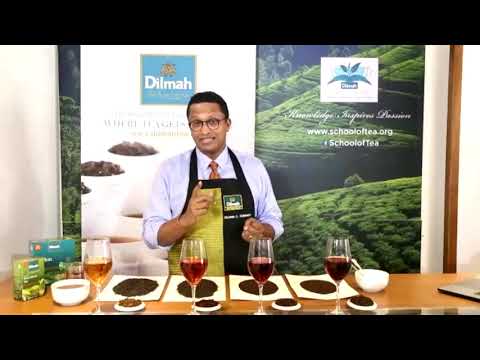
Ever wondered where tea gets its taste? Tea Grower and Dilmah CEO, Dilhan C. Fernando explains where tea gets its taste, variety and more in our first public webinar from a 12-part series. The Dilmah School of Tea is known for reimagining tea and sharing inspiration with tea lovers and professionals since 2009, its new 20-minute webinar series is created for all tea lovers of tea.
Transcript
This transcript was created automatically from the audio and checked for names. Minor errors may remain.
Good afternoon, everyone. Welcome to the first in our virtual tea inspiration sessions. Now, this is the first time we're talking to the public. Our School of Tea was established in 2008. And it has inspired hospitality professionals around the world. So we have particularly honored my colleagues and I to have the opportunity to share our love for tea with each of you. Thank you for joining us. Now, all this session will be run is we're going to be talking tea. We're going to be doing a little bit of tasting, and we're going to be asking you a few questions. Questions are not mandatory, but try to answer them, please, if you like what we're asking. It's impossible to cover 5000 years in 20 minutes, but we're going to give it a try. And so the most important thing about tea is it is natural. It is incredibly varied. It is so varied that there is no natural herb that offers that same spectrum of taste, flavor, texture, variety. And the colors that
you see on this slide here, they're simply the tip of the iceberg because the array of different colors hues that white tea, green tea, oolong, black tea, strong black tea offer. It is absolutely beguiling and incredible to consider. And we have a question for you. What kind of tea do you like? Black tea, green tea, white oolong or herbs? Tell us what you think. What we're going to look at in the next few moments is how these different teas form their taste. The core of all of that is fermentation because it is fermentation that decides the difference between a green tea, an oolong tea, a light black tea, a strong black tea. And so with that, we're going to talk a little bit more about different types of tea. So we've got the poll results back. Most of our participants today like black tea. Fantastic. That's good for us because Sri Lanka, Ceylon is known for its black tea, although we also produce some pretty amazing green teas and oolongs.
So when tea gets its taste, the most spectacular thing about tea, what really makes this special is the fact that we call ourselves tea makers. And there are hundreds of tea makers around Sri Lanka who each are excellent in their jobs. But who really makes tea is none of us. It's nature. And we're going to have a look at that. When I talk about nature, it's the climate. We have a concept called the agro-climatic regions. It means the combination of climatic soil factors. It is in ancient Chinese law, it was referred to as the influence of heaven and earth, rain, sunshine, wind, et cetera. Everything that makes up climate and the soils because soils are critical in any plant and its influences the taste, the quality, the characteristics of its produce.
And so typically when you have a high elevation, you have something very different. It's cooler. Normally, it's mid elevation, it's a little warmer, low elevation in Sri Lanka. In this island, low elevation means by the ocean at sea level, intensity, strength. Many of you probably know the wine industry. So with wine, you have intensity, you have heat, you have different climatic aspects such as humidity, contributing to strength to produce a Cabernet Sauvignon. Now try producing a Pinot Noir, a light, slightly floral wine in an area known for its humidity and heat. Well, that'll be a long time coming, most likely impossible. And so in Sri Lanka and in any tea growing region where the climate varies, the tea varies. That's just the first part of it because there's more. We've got here four different teas. Now here, we're showing you on the slide where each of these teas come from. You have this spectacular, in fact, my father's favorite. It's called Ranmata. It comes from beyond the city of light, beyond Nurellia. It is
beautifully aromatic. It's light, little bit of citrus. It's got a mild oakiness, but not too much. It's a little floral, little irasi and so more herbaceous, less intense. It's delicate and in tea, what you see on the eye connects with what you experience on the nose and finally delivers together what you experience on the tongue. And so this tea, supremely light, delicate, a little bit of sweetness and that's grown at 6,000 feet above sea level. Then you have our Uda Watte. Now, this is a little darker. It's clear to see in the combination here. It has more structure. It has strength. It has more definition, more intensity. It's not very intense, but it has that intensity. It is structured with a woodiness and it is much less floral. It has literally no floral characteristics, but it has more woodiness, still a little bit of sweetness. And then you come all the way down to a lower elevation. So now we are coming from the top 6,000 feet above sea level. We've come right down to 3,000 feet above sea level. And
this is what my father calls a Meda Watte. A little more malty, earthy, stronger, fundamentally different to the Ranvata. And so that brings us to sea level. And along this journey, we have come from Nuwara Eliya all the way through Hatton, through the Dimbula Valley. We have come down to Navalapitiya. And finally, we're coming a little south of Ratapura, past the city of gems and down to sea level near the port city of Galle. Wow, intensity, bitter chocolate. It's got strength. It's robust and it's strong. So how does all this happen? It's not the tea maker that does it, because it is one plant. It's Camellia sinensis. It's principally one method. It is entirely the influence of nature that determines the difference between these four teas. And that we can see on the eye, on the nose. I wish I could invite you here to nose these teas, but on the nose and you'll have to take my word for it. And finally, on the palate. And so we go to the next dimension
as to what constitutes, what contributes to the differences. Well, we had a look together with our sensory specialist from the faculty, from school of tea faculty. We had a look at the different soils in different areas, because it is the soil that feeds the metabolic system of the plant. And therefore it is the soil that influences the characteristics of the enzymes and the different juices, you could say, in the leaf that form tea when it's picked. And so we found at the highest elevation where you have Ranvattha, you have clay soils. So more humus, you have high acidity. We found, as we went down, we found a little more sandy. We found loamy soil in the mid-elevational areas. And finally, we found sandy soil at down the eye, and that's the influence of earth, heaven, earth. And it's only finally that there is the influence of man or woman in the tea-making art. And so soils are one aspect, but the sense of place that each of these teas is blessed with, and what makes taste in each case is a combination
of different characteristics. Climate means wind, it means rainfall, it means the pre-monsoonal winds, which precede the monsoons that we have here, which also means the temperature differences that happen from time to time. It means the combination of soil, of topology, geography, of course, and a multitude of factors from the fact that a shade tree could influence the intensity of a particular tea. And so if you have, for example, on that spectacular Great Western Estate, you have the unique local topology where you've got the Great Western Range sheltering certain fields, other fields open to the morning sunshine, open to wind, creating sometimes a Bernoulli effect created through different hills, you have uniqueness again.
Each field with a different characteristic, a different likeness, different delicacy, citrus, all the way to bitter chocolate. It's one plant, Camellia sinensis, and that is really the magic in tea. Because you have in this one element, we call it a gift of nature, you have this incredible variety that lends so beautifully with moods, with tastes, with pairing in gastronomy, in mixology, and so on. But that's a subject of a whole different discussion. Now, we have a question for you. And what we would like to know this time is does it matter to you where your tea comes from? It matters to us, because hopefully what I've managed to convey so far is that tea has an identity. The identity is connected with the geography. It is in a very real sense, the fingerprint of nature in that specific area.
Now, in wine, terroir, and in this case, terroir derived not from different varieties as in wine, but derived from the same plant, is much more powerful. It is the sense of place. And a sense of place is defined by the combination of characteristics that we talked of.
It can be as unique as a microclimate. It can be even more unique if, for instance, you have a eucalyptus tree shading a particular plant. That plant is going to give you a very different tea to the other plants that are not shaded in the same way. And so you have this extraordinary beauty, the variety that is responsible for all of the different uniqueness in teas. And that's how a few feet away from me, we taste each week 10,000 different teas, mostly individual, at least 4,000 terroirs amongst them all. And which is a beautiful thing because this week, you have from Dangheld estate, a bright, strong tea. Next week, it's something completely different. Same estate. What happened? The weather changed. And so with appreciation for your comments on that, I want to talk to you about the importance of the purity of origin.
And so we figured that it is nature that defines a particular characteristic in a tea. And so in that context, you would want to ideally taste nature. We are the first generation, us and subsequent generations. We are in a time when for the first time we risk losing everything in nature that we consider normal, a part of our life. And so the value of nature is so much greater today. And so the influence of nature is palpable here. And it is so important to us as tea growers and tea makers. The brightness we taste here is the quality of light. What we taste in this Ranb after tea, the floral note is a beautiful morning light. It is the afternoon showers. It is the temperatures. It is the diurnal range. It is the cool breeze. Whereas in Yatavata, what you're testing is tea, yes. But you're also testing the intensity that comes from the humidity.
You're testing the strength, the earthiness that comes from the sandy soils. You're almost able to taste the winds that coming from the Indian Ocean through its intensity. And so that influence of nature is so critically important to us, which is why I hope that your answer to our question is going to be that you value the origin of where tea comes from. And so we wouldn't mix different wines with different characteristics, different identities. And in the same way, please stick to pure origin teas, because that is truly a tea that is crafted by nature. Mixing or blending is not a great thing. In some cases, it may be, but not in the case of tea. And so we move on.
We need to address a myth because lots of our viewers and lots of our School of Tea public participants tell us, you know, I like big leaf tea. Tea is beautiful. Big leaf tea is absolutely spectacular. And you can see in this OPA, this beautiful leaf formation is tightly and so on. But typically, you would have a look at this tea, and you would say, hey, you know, that's a very small leaf tea. It's dusty, true. Looks like dust, but it's nothing to do with dust. The difference in size of different teas, whether it is this OPA, whether it is this beautiful, beautiful pecco and the BOPs or the dust, the size of the leaf determines its intensity.
And how that happens is simply the law of physics. A larger leaf you have in a typical teaspoon, you would have, and a teaspoon is called a teaspoon for good reason, because it's a spoon for tea. And so you would have from two and a half grams of an OPA, you would have a certain surface area. The surface area of the tea in contact with the water with two and a half grams of dust is four times greater. And so logic dictates that in the process of brewing the extraction, you're going to get a much stronger brew with the dust or with the small leaf tea than with the big leaf. So trying to make a breakfast tea, an English breakfast tea or a Ceylon breakfast, or any breakfast tea, typically a breakfast tea, you need energy, you need strength. This will not do it. You can brew this for 24 hours. You're not going to get the intensity that you need. And if you take your tea with milk, it's a smaller leaf for you. That's to do with intensity, assuming,
of course, it's a good tea. And that's what we make here in Sri Lanka. And so we have a question for you. And that question is, does it matter? How would you like your tea? Do you like it light? Do you like it medium or strong? Why we're asking you all of these questions is that we are trying to refine the series. We have 12 sessions in this series coming up over the next 12 months. And we have a few special sessions. And what we want to do is to make sure that our virtual sessions are as responsive to what you tell us in these questions as possible. And so your answer is that you like it medium. You know, that's a little bit of a cupboard, because ideally, if you take your tea with milk, you should take it strong. If you take your tea without, it's okay light. But no one should have a favorite tea. There should be a tea for morning.
This is mine. There should be tea for afternoon. This is mine. And there should be a tea for evening. And this is mine. There should be a tea for when you've had steak in the afternoon. And this is mine. Why? Appearing, functional and sensory. There should be a tea for when you've had a salad. There should be a tea for when you've had a chocolate. Could be either of these. And so tea should never be a single experience. It should be a multitude of varied experience. That's what life is about, right? And that brings us to how we taste tea. So I'm going to make a little bit of noise here. Okay. I apologize to all of those who insist on good manners. It's not a question of manners. It's a question of being accurate. And so typically, and once again, cheers, we drink tea in this way. It's wonderful. You have the taste, you have the sweetness, you have different characteristics of the tea, you have the texture as well.
But like a wine taster in tea, that only gives us 50% of the resolution of this particular tea. And so the slide here shows that half, typically half of the tasting is done in your brain, which is why we do this. And if ever you walk into our tea room, you'll find that it's full of people making lots of noises all the time. The reason is you need to be able to aerate your olfactory bulb so that in addition to the five senses on your tongue, you're also tasting with the brain. And that's what gives you perfect resolution. So the difference that I get from tasting this tea sipping in the polite sense and tasting in the tea tasters sense is the depth, the intensity, the structure. I would need to know that if I was analyzing the sensory aspects of the tea to do a pairing, for example, to understand the quality of manufacture and so on.
Typically, you wouldn't have to do it. So don't worry, it's not going to be a noisy afternoon tea at home. But it's something that we need to do. So what do we mean by freshness in tea? When a tea is made, and when it leaves our factory, typically, you will have around 2% moisture. And we're talking about freshness for a very practical reason. Gradually, as you have the ambient humidity, and well in Sri Lanka, it can be 70% upwards depending on whether it's raining or not. Typically, in most countries, it'll be around a little bit less than that. You have the tea absorbing moisture. Tea is hygroscopic, it just absorbs everything. Right now, if I was wearing an intense aftershave, it would be in this tea within five to 10 minutes.
And so in the same way, tea absorbs moisture. So make sure that when you get your tea, you retain its freshness. Why? Because freshness is critical for flavor and for the natural goodness. When you have a tea at 2% moisture, eventually it goes up to 4%, 8%, 10%. By the time it reaches you, it should be around 12%, 13%. But beyond that, it can develop bacteria. It can develop aflatoxins. What these do, they're not going to harm you because you put the hot water in and you neutralize anything that might be negative in there. But what they do is they attack the flavor and they make the tea milder. It loses that fingerprint of nature we talked about. And it also attacks the natural antioxidants. Flavor and antioxidants are connected, which means you don't get all the goodness in tea. Goodness we're going to talk about at a future session. So freshness is important because it is freshness that gives tea the aroma, color, antioxidants, that's a goodness and the taste. I'm going to tell you why
taste matters. Taste matters because it is the taste of nature. That is principally important. Taste matters because it connects with your lifestyle. This tea in the morning gives you a great energy boost. You feel good because of its organoleptics. This tea in the evening, it combines with your mood. It's a relaxed chilled out tea. It's also great if you're considering adding a little bit of gin as against adding rock. But that's again a whole different discussion. So tea, gastronomy and mixology. Now that brings me up to time and I want to tell you we have a few sessions coming up. 12 sessions in all in this series. And the next one is happening on 17th of December. It's called All I Want for Christmas is my tea inspired cocktail or vegan mocktail. And what we want to do is we want to share with you some of the principles I talked about. You understood what constitutes taste in tea. Well now we need to understand how we make
that relevant to our lifestyles. Cocktails and mocktails are one way. And then thereafter we're going to be talking about tea trends for 2021. But that will be in January. But we have questions and before you go, we would like to ask you, was the session useful and would you like to continue the journey with us? Depending on what you say and depending on your comments, we'll be happy to refine, extend, reduce, change the content to whatever you tell us. Because the School of Tea exists to share our passion, to share our love for tea. And it's really meant to inspire. So I want to thank each of you for joining us. Thank you. Thank you to my colleagues. We have a room full of people here, making sure that tech is right and making sure that we're broadcasting to you. And with that, I would like to say thank you for joining us. Cheers and do try it.
More episodes
All episodes
The Story Behind Your Cup of Tea – Episode 3 : All I want for Christmas is my Tea inspired Cocktail (or Vegan Mocktail)
Watch Transcript