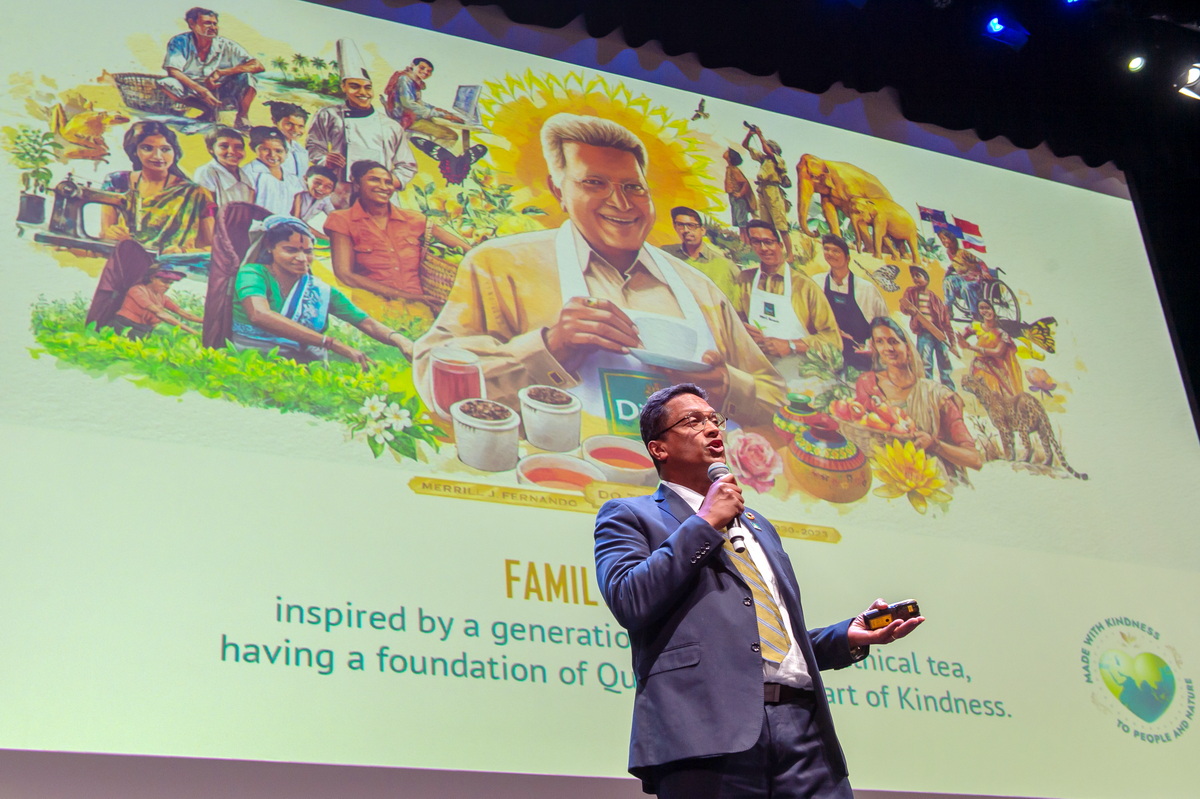
Every good dish – and so every great Chef – needs good ingredients. Therefore also good artisans, soils, and ultimately Nature. This was the truth I shared with the global body of Chefs at the WorldChefs Congress in Newport, Wales last week. Chefs understand the genesis of flavour so they probably knew that already and it was only context, to a vastly more important truth.
Diners have changed since COVID; more conscious of preventive health, they value food & beverage with proven health benefits. Now more conscious than ever of ethics and sustainability, younger consumers especially demand and relish a truthful origin story where provenance links taste, goodness and kindness. That means good, safe, sustainably and ethically grown ingredients. It’s not only good Tea that offers that powerful combination, there’s also Ceylon Cinnamon and more. That’s where the grower comes into the picture.
Growers – mostly artisans, farmers – are key to the existence of every nation. Here’s why. Providing nutrition, delivering revenue, sustaining rural economies, they underpin food security in this increasingly fractured world. That’s not all – growers do more – they are stewards of soil, biodiversity, and livelihoods. These are weighty responsibilities. Beyond nutrition, food security, rural economy, biodiversity and livelihoods, they are the critical context for green growth, eco-tourism, key to containing unsustainable urban migration and securing the future of every economy with genuinely sustainable green economic growth.
Yet in a world that is indifferent to the challenges faced by people who produce their food, where countries often spend more on missiles than education, cut critical development aid and healthcare budgets to fund their militaries, the role of the grower is dangerously devalued. Compromising a segment of our community that is so important for well being, security, economy and future generations, delivers yet another existential crisis.
We grow tea and cinnamon. Most brands trade both, because it is vastly less costly and complicated than growing. For years responsible agriculture has been unprofitable, with harsh climate, changing lifestyles and predatory marketplaces only deepening that crisis. Traders monopolise margins, earning an unfairly and disproportionate share of the price of most produce. Their emphasis on buying cheap to maximise profit disregards the interest of growers and consumers to an extent where true Cinnamon – the good one – is substituted by an inferior one – cheaper, yet toxic at certain levels. It is the same with tea, maximising profit at the expense of consumers with unethical methods like product reformulation to eliminate premium ingredients like Ceylon Tea or Ceylon Cinnamon and reduce cost without alerting consumers, multi-origin blending diluting origin for lower cost. All at the expense of growers.
Most growers have an abiding commitment to their produce. After all we care for our teas from sapling, in our nurseries to harvested and finished product – somewhat like the enduring love a parent has for a child. My father devoted his life to tea, a devotion that has only grown as our business has transitioned a generation. We honour a tradition of growing, sustainability and ethics that is often described as outdated and uneconomic. Abdicating those founding values of purity of origin, quality, goodness, packing at source for freshness, would unquestionably help us to recover the cost of our refusal to compromise. But you can’t harm the object of your devotion, so compromise is not an option.
As growers, our responsibility is to soils, biodiversity, to the lives of our workers and the wider community, to traditions that assure quality, conservative agricultural practices that make our produce sustainable, and kindness that makes it ethical. The decisions we make on our lands today will influence the lives of future generations, in the quality of soils they have to assure food security, in the biodiversity they have for clean air, water and climate resilience. That means looking to Nature for solutions – researching and developing climate adaptation, regenerative agricultural methods – while it is cheaper not to do either and opt for convention.
That was my plea to that august assembly of Chefs. Consider the role of the grower, the irrevocable link between good ingredients and responsible artisans, the harshness of the circumstances growers face, with pricing that rarely reflects value. Chefs carry the aspirations of artisans on every plate; a partnership between both for Quality, Integrity and Kindness could be a powerful proposition, delivering food of higher quality, more nutritious and a harvest of livelihoods adding to good taste. It wouldn’t cost much – good tea is one of the world’s most affordable luxuries. In tea and other produce, the justification for quality and ethics goes beyond the cost per serving that consumer consider in stores. Regenerative agricultural practices and ethical production deliver healthier, tastier produce – with good health and wellness, good taste outlasting the momentary, perceived benefit of discount. The vastly greater cost of discount driven agriculture manifests in degraded soils and everything Rachel Carson predicted in 1962.
For growers, biodiversity, nature, food safety, taste and the lives of consumers it would be transformation, a paradigm shift. For future generations, yet unborn, it would be the difference between a life of fulfillment and one of inconceivable hardship.
The cost? Less yet fair and proportionate margin for middlemen. The benefit? Unprecedented for people and nature.

